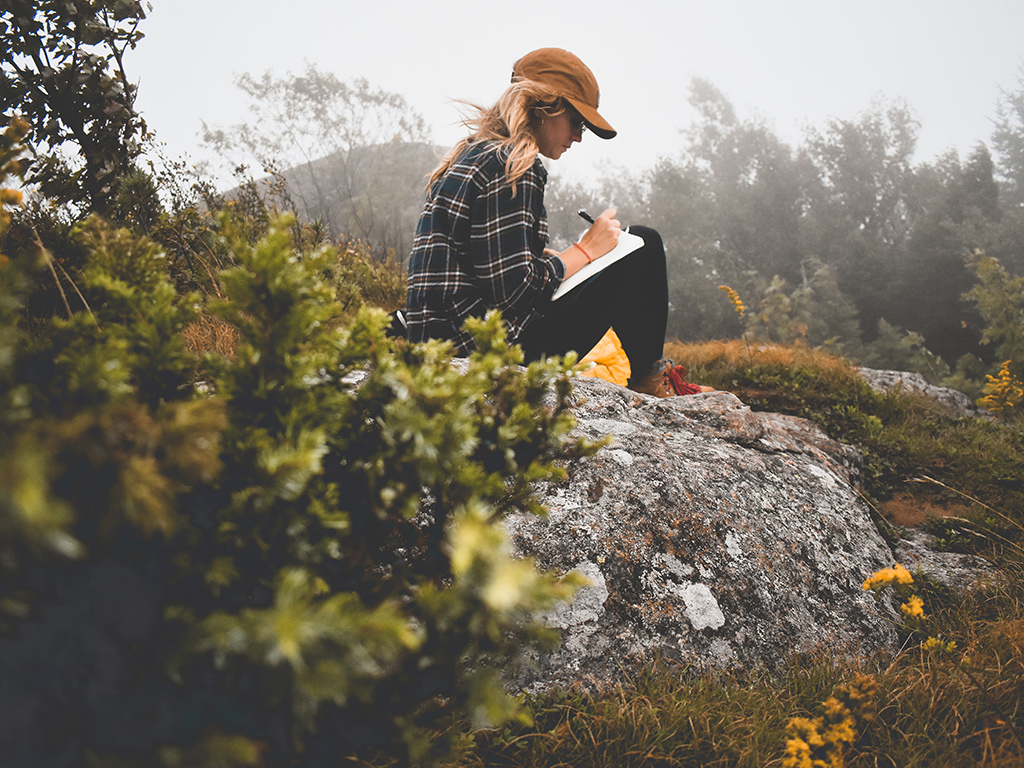
Nature Journaling is the rewarding practice of recording personal experiences from the great outdoors through a combination of writing, drawing, and other creative expressions. This article contains helpful advice that will help anyone start nature journaling like a real explorer! I’ve also included some of the benefits of this rewarding activity.

Nature journaling is easily my favorite hobby. In fact, I love it so much that I wrote a book about it! Aside from a growing need to reconnect with nature, there’s a reason why nature journaling is becoming a popular practice among hikers, birders, gardeners, and nature lovers in general. To briefly summarize the long list of benefits, nature journaling is simply a fantastic approach to enhancing your experience of the outdoors. So why not start nature journaling today and see the world in a whole new way?
I’ve made a digital sample of my book, A Field Guide to Nature Journaling, available to download ABSOLUTELY FOR FREE! Complete the form and I’ll email you a sample TODAY.
Hike And Draw LLC is a participant in the Amazon Services LLC Associates Program. As an Amazon Associate, your use of my affiliate links helps support my work. Thanks in advance!
Nature Journaling
My Nature Journaling Journey
Back in 2020, when NYC shut down because of COVID, nature journaling simultaneously became my escape from lockdown and my masterclass in natural history. Every other day, I’d visit a local city or state park to observe and document two specific areas of interest that add enjoyment to my time outdoors. My focus was on learning about the local native plant and bird species. It was incredible how quickly I began learning about these subjects through direct observation! Before the year was through, I completed my first “dedicated” nature journal. Looking back, filling that nature journal was one of the most rewarding experiences I could have asked for during an otherwise difficult time.
Let Me Help You Start Journaling
Chances are that if you’re reading this article, you’re either curious about nature journaling or you’ve already hooked like me. Either way, my first piece of advice can apply to you. Rather than approaching this activity with broad strokes, I recommend selecting one or two main areas of interest that pique your curiosity enough to keep you coming back for more.
Your Nature Journaling Niche
When considering your niche or area of interest, it’s essential to reflect upon your relationship with the great outdoors. Are you a hiker or wilderness guide? A hunter or gardener? A birder or fisherman? Maybe you’re none of the above, and this is your first time answering the call of the wild. Regardless of where you are today, let’s consider where you want to be tomorrow regarding your level of expertise.
Pro Tip:
“Start with a common subject that unifies the journal as a whole, such as a location or a season, rather than a specific plant or animal species.”
James Sisti
Tweet
Since there are countless starting points, discovering your niche provides an exciting subject to explore. This helps you maintain motivation while unifying your journals with a common topic or theme across multiple seasons and years. Not every nature journal requires a specific theme, however. A general “nature” theme is a great way to explore different topics simultaneously, allowing you to discover what truly fascinates you. If you prefer this approach, consider dedicating your observations to a location you often return to and record changes over time.
Examples of Nature Journaling Niches
- Neighborhood bird habitats
- Wildflowers in Spring (ephemerals)
- Insect activity in your garden
- Seasonal weather patterns
- Varieties of fish in a nearby body of water
- Woodland fungus varieties
- Coastal wildlife
- Minerals and fossils
- Wildlife tracks and migrations
- Local native tree species
Assembling Your Nature Journaling Kit

Gearing Up with Goals in Mind
When it comes to nature journaling, there’s no one-size-fits-all format. Your journaling medium should complement your specific goals. For instance, a birder may prefer a bullet journal for quick entries on the fly, whereas an artist might prefer something more closely resembling a folio. Format options include sketchbooks, binders with hole-punched paper for easy editing, pocket notebooks, and multi-year calendars for tracking observations over time. Every nature journal is unique because it reflects the individual author’s thoughts and imagination, even if people use the same format or method. I wrote another article about assembling the best nature journaling kit.
Pro Tip:
“Keep a field journal for the quick-and-messy work and an at-home journal for edits, detailed observations, and final drafts.”
James Sisti
Tweet
Digital Resources
There are a variety of handy digital tools you can use, too. For example, mobile apps like iNaturalist and Seek help narrow the identification of plant and animal species while on the go. Some might find digital media distracting, so experiment with whatever tools provide the most value for your work. Also, it is important to consider that digital tools like this are only sometimes 100% accurate and can lead you down a false rabbit hole. Double-check your observations with a few specimens and a field guide.
Helpful Nature Journaling Apps
- Seek: Seek is a nature identification app developed by iNaturalist in collaboration with the National Geographic Society. It uses artificial intelligence and image recognition technology to identify plants, animals, and fungi based on photos taken by users, providing instant information about the identified species and promoting nature exploration and learning.
- iNaturalist: iNaturalist allows users to identify plants and animals with the help of the community. Users can upload photos, and the app suggests identifications based on the visual data.
- PlantSnap: PlantSnap helps users identify plants, flowers, trees, and mushrooms by simply snapping a photo. It provides detailed information about the identified plant.
- Merlin Bird ID: Created by the Cornell Lab of Ornithology, Merlin Bird ID helps users identify birds by asking a few simple questions or analyzing a photo.
- Star Walk 2: Star Walk 2 is a stargazing app that allows users to explore the night sky and identify stars, constellations, and planets. It’s an excellent app for nature enthusiasts interested in astronomy.
- AllTrails: AllTrails provides detailed trail maps, reviews, and photos for outdoor enthusiasts. It’s useful for finding hiking and biking trails, as well as discovering new outdoor activities.
- SkyView: Similar to Star Walk, SkyView is an augmented reality app that allows users to point their devices at the sky and identify stars, constellations, and celestial objects.
- Leafsnap: Leafsnap helps users identify tree species by analyzing photos of leaves. It’s a handy tool for nature lovers and botany enthusiasts.
- National Park Service Apps: Various national parks have apps that provide maps, trail information, and details about the park’s flora and fauna. Examples include Yellowstone National Park and Grand Canyon National Park apps.
- MyRadar: MyRadar is a weather app that provides real-time weather information, including radar and satellite data. It’s useful for outdoor activities, especially hiking and camping.
Helpful Nature Journaling Websites
- National Geographic: National Geographic’s website offers a wealth of information about nature, wildlife, and environmental issues.
- BBC Earth: BBC Earth features articles, videos, and documentaries about the natural world and wildlife.
- The Nature Conservancy: This organization’s website provides information on conservation efforts, environmental news, and tips for sustainable living.
- Smithsonian’s National Museum of Natural History: The Smithsonian website offers educational resources, virtual tours, and information about various natural history topics.
- The Audubon Society: Audubon’s website focuses on bird conservation and provides valuable resources for birdwatchers and nature enthusiasts.
- Earthwatch Institute: Earthwatch engages people in scientific field research and conservation efforts around the world. Their website provides information about ongoing projects and how to get involved.
- ARKive: ARKive is a collection of multimedia profiles about endangered species, showcasing photos, videos, and facts about various animals and plants.
- The Dendro Lab: The Dendro Lab is an online masterclass, podcast, and in-person tree identification experience guided by master naturalist Carey Russell.
Choosing Your Nature Journaling Spot
Finding the Best Time and Place
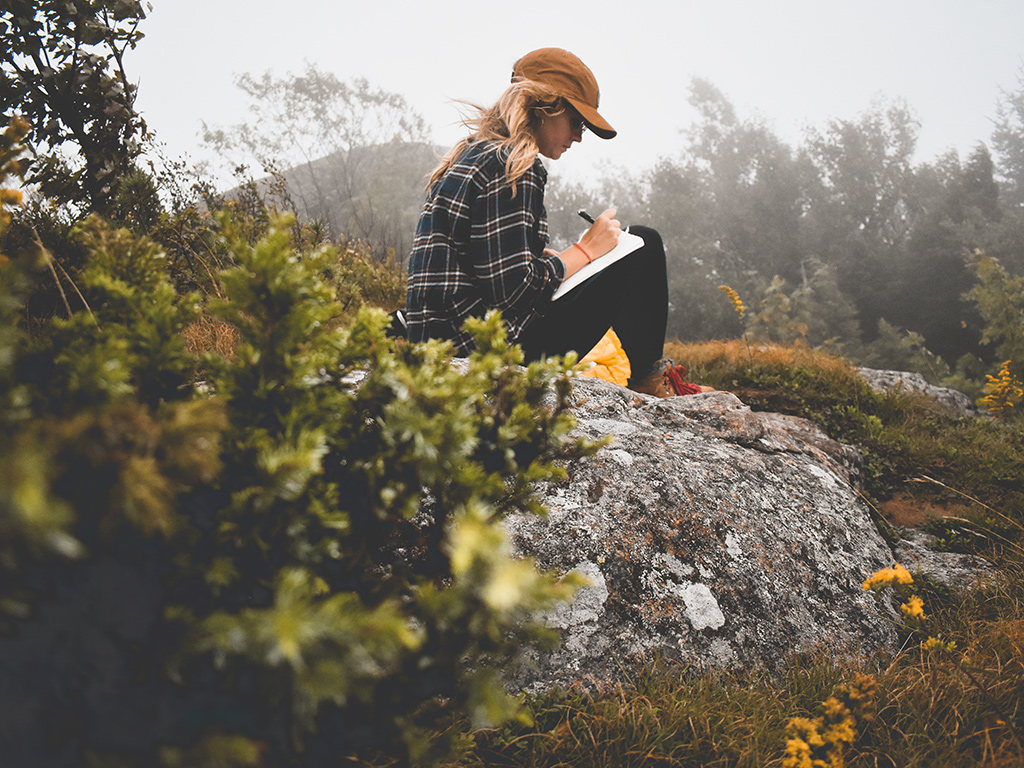
Choosing the right time and place for your nature journaling practice can greatly enhance your experience. One of the biggest complaints of my hiking buddies is that I spend too much time jotting down field notes and not enough time walking. It’s important to separate your objectives if you’re tired of hearing comments from the peanut gallery. Here are a few pointers that have helped me get the most out of my time outdoors.
Journaling in Peace and Quiet

The goal is to find an ideal location that you can frequently visit. It helps when you enjoy spending time there. For example, I can’t stand when people bring portable speakers into a natural setting. Since I prefer to hear the sounds of nature, I often look for a secluded corner of a city park, a quiet community garden, a state park, or a nature reserve. A peaceful environment that allows you to connect with nature without distractions or interruptions is a huge benefit that shouldn’t be taken for granted.
Look for a Spot that has Variety

A location that features a diverse range of natural elements is a nature journaling goldmine. When I lived in Brooklyn, I would often frequent Prospect Park, which boasts a variety of ponds and streams, forests, and fields. There was even a zoo! Having a variety of elements can provide you with an exciting menu of rich and inspiring subject matter for your journal entries.
Nature Journaling in Comfort
Ensure that you’re physically comfortable in order to focus on your observations. Weather-appropriate clothing is always a must for safety reasons, as well as any medication or dietary needs. Some folks go all in and bring a portable chair to sit on. I prefer a simple gardening pad that can fit easily inside by backpack. Having a good cover element, like an umbrella, might prove handy where shelter is scarce. Comfort is subjective when it comes to all outdoor adventures, but it pays to have these essentials in mind before heading out.
Pro Tip:
“Remember, the best nature journaling spot is one that resonates with you personally. Trust your instincts and choose a location that makes you feel connected, inspired, and at peace with nature.”
James Sisti
Tweet
Ways to Fill Your Nature Journal

Don’t Be Afraid of Making Mistakes
When I first started nature journaling, the biggest obstacle was myself. I had this ridiculous fear of “ruining” a new notebook, which caused me to miss out on all the fun! For example, if my handwriting wasn’t neat, if I made a spelling mistake, or if the sketch wasn’t good, I would either erase everything or tear out the page and lose all of my observations. Luckily, I’ve moved beyond my perfectionist tendencies and found a few practical techniques to help fill my nature journal.
Adopt the Nature Journaling Mindset
It’s important to have the right headspace when approaching any creative endeavor, and nature journaling is no different. The mindset I propose you adopt is that of a natural history reporter. Your job is to collect as much data as necessary to learn something new. Collecting data can be challenging at first, so it’s essential to use a reliable and flexible system that will allow you to cover a wide range of topics without getting overwhelmed and disorganized. There are many methods for collecting and organizing data, but this simple system is an excellent foundation to build upon as you develop your practice.
Pro Tip:
“Adding ‘baseline data’ to your observations will link all of your nature journaling entries together, even if you are writing about different subjects!”
James Sisti
Tweet
Nature Journaling like a Pro
-
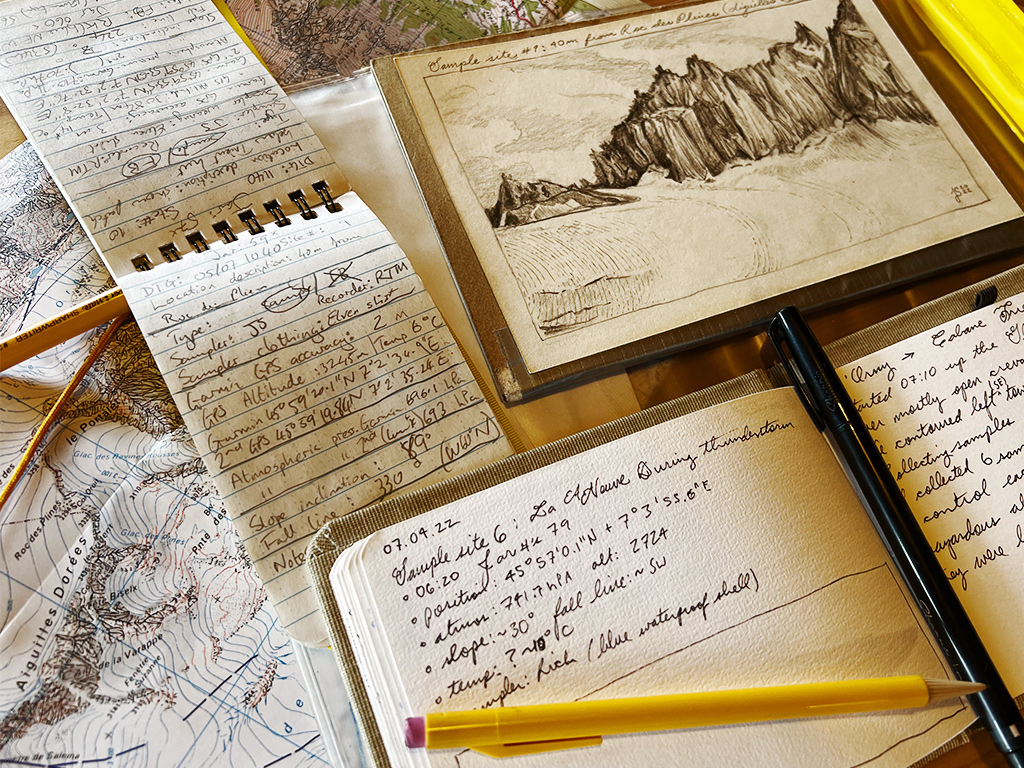
- Collect relevant data. Begin every journal entry by recording “baseline data,” or the minimum amount of data required to add scientific value to an observation. This consists of the date, location, *environmental conditions, and name of the subject you are observing. Baseline data links multiple journal entries over time and provides context for each recorded event.
- Include Your Questions. It’s important not to shy away from documenting unfamiliar topics in your nature journal. Sometimes, this means ending up with more questions than answers, but don’t worry, that’s a good thing! When this happens, simply write down every question that comes to mind, just like a natural history reporter. Collecting questions is just as important as collecting answers. The baseline data I mentioned in Step # 1 provides a context for every “how?” or “why?” question you choose to include in your notes. This creates opportunities to add answers to these questions in the future. Consider sharing your questions with a knowledgeable naturalist, either online or at your local Audubon Society chapter, to expand your understanding of the subject. You can always conduct further research by visiting a library or browsing one of the websites I recommended earlier.
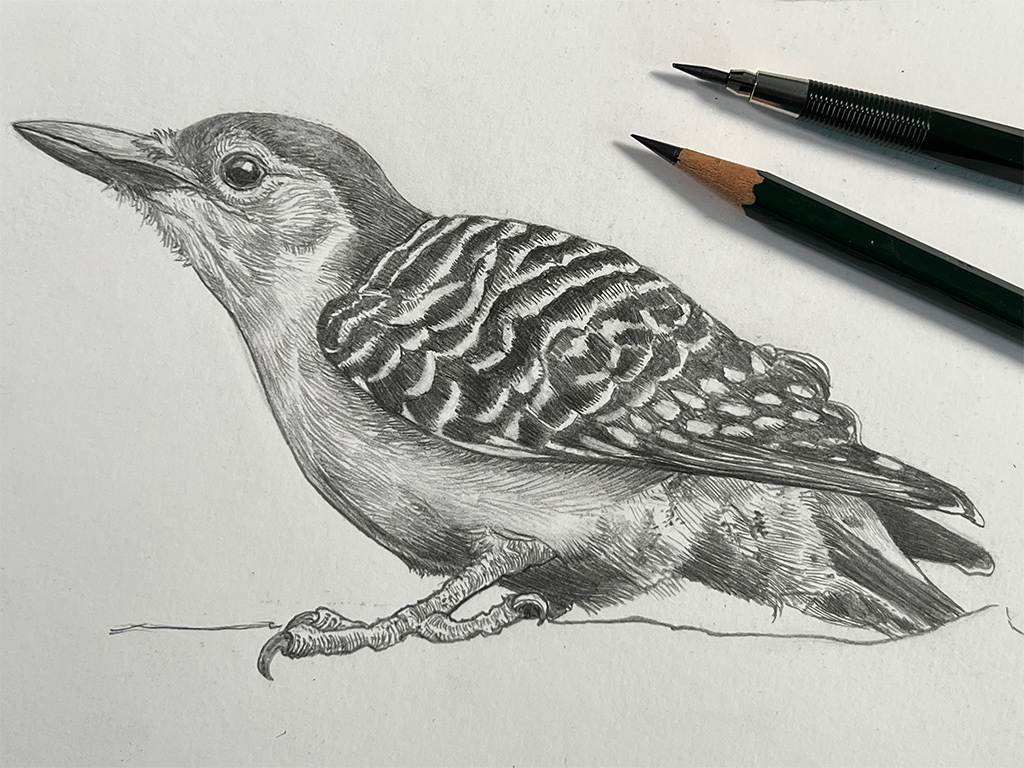
- Include Visuals. Supplement your notes with visual media. Combining baseline data with art, photos, and specimens makes a nature journal come to life in a unique way. Never be intimidated by sketching in your nature journal! The act of sketching helps you to focus on a subject long enough to notice a detail that would otherwise remain unnoticed. Treat this purely as a method for collecting data. Your nature journal is meant to be a companion in good and bad weather. If you’re interested in creating a very art-centric nature journal, adjust your field kit by including a waterproof pouch or container that will help protect your artwork.
- Act like a professional when observing wildlife**. Read about the animals you want to observe before encountering them in the field. Learn the “do’s” and especially the “dont’s.”
- Find a mentor or join a nature club within your niche. Socializing your research is an excellent way to gain valuable insight that might not be found online or in guidebooks. Also, consider how the benefits of camaraderie will add more enjoyment and consistency to your time in the field.
*Environmental conditions consist of the weather, temperature, and wind direction. Consider factors like proximity to water, terrain type, remoteness, and exposure to the elements.
**Observing wildlife is a special privilege that deserves the utmost respect. Don’t provoke an incident that can easily be avoided. Maintain a quiet and safe distance at all times. When in doubt, disengage and consult an experienced ranger or other authority figure.
Expanding Your Nature Journaling Practice

Sharing What You Learn
Assuming that you’re interested in putting the previous sections of this article into practice, how do you think nature journaling will change the way you experience the outdoors? Consider how each moment of wonder and inspiration will make its way onto the pages of your journal and how they will be preserved as endearing memories. Now consider how sharing your journal could inspire others to make their own memories in nature!
Nature journaling begins with a personal call to experience the outdoors more intentionally. It fortifies your education through direct observation and develops your skills through personal experience. This practice helps you develop a keen eye for exciting natural phenomena, putting you in a position to share what you’ve learned with others over time. Now, here are a few ways that your nature journaling practice can broaden to reach members of your family, friends, and future generations.
- Mentor a young naturalist
- Lead a nature walk with family and friends
- Contribute to a citizen science project
- Contribute articles to magazines within your niche
- Volunteer to assist with nature-based projects or merit badges for a local scout troop
- Give a talk at a local forum, like a public library, park, nature preserve, or a bookshop
Nature Journaling Guidebook Sample

After years of research and hard work, I’ve put my very best into writing even more helpful nature journaling tips included in this FREE downloadable field guide sample. Download a sample of my new guidebook, “A Field Guide to Nature Journaling,” today and learn how to add more value to your time in the great outdoors while improving your knowledge and skills.
More Nature Journaling Resources
Nature Journaling is a novel way to memorialize your adventures in the great outdoors. Even as a hobby in its own right, nature journaling has made my time in nature more enjoyable and has taught me how to be a more observant artist and hiker. It feels extraordinary to have a shelf full of personal experiences in nature to return to in my professional work. Still, even more so, I can share these experiences with my friends and loved ones.
 Hike and Draw