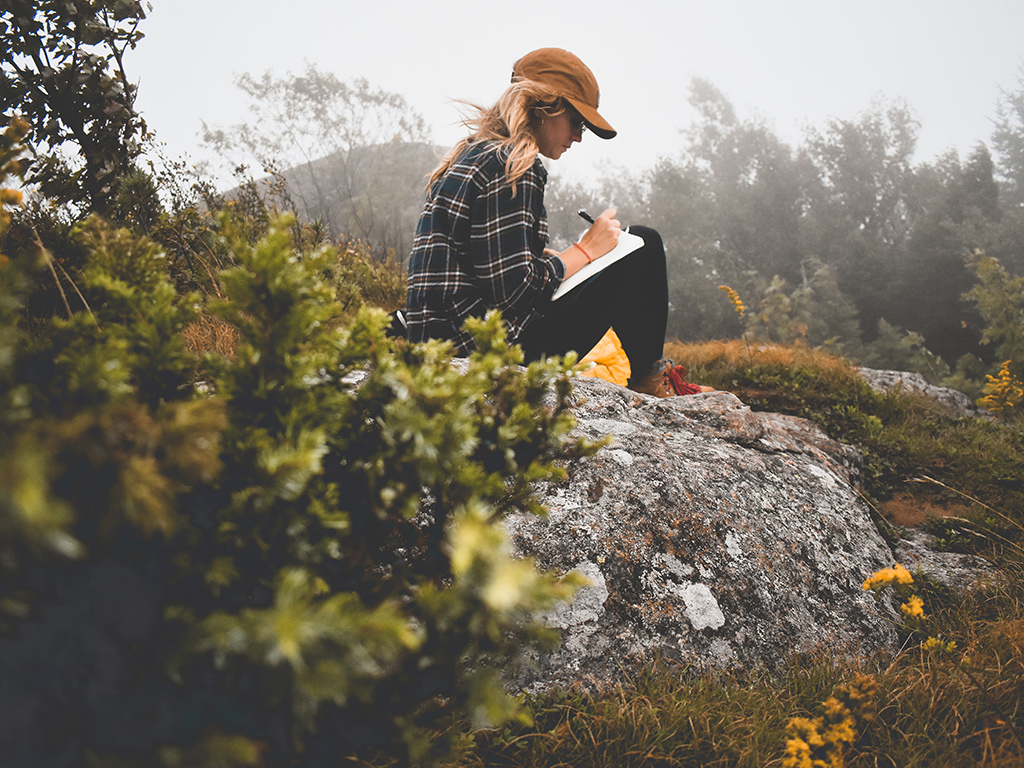
Amazing Tips for Nature Journaling like a Pro

Nature Journaling is the rewarding practice of recording personal experiences from the great outdoors through a combination of writing, drawing, and other creative expressions. This article contains helpful advice that will help anyone start nature journaling like a real explorer! I’ve also included some of the benefits of this rewarding activity.


nature-journaling-01

Nature journaling is easily my favorite hobby. In fact, I love it so much that I wrote a book about it! Aside from a growing need to reconnect with nature, there’s a reason why nature journaling is becoming a popular practice among hikers, birders, gardeners, and nature lovers in general. To briefly summarize the long list of benefits, nature journaling is simply a fantastic approach to enhancing your experience of the outdoors. So why not start nature journaling today and see the world in a whole new way?

I’ve made a digital sample of my book, A Field Guide to Nature Journaling, available to download ABSOLUTELY FOR FREE! Complete the form and I’ll email you a sample TODAY.

Hike And Draw LLC is a participant in the Amazon Services LLC Associates Program. As an Amazon Associate, your use of my affiliate links helps support my work. Thanks in advance!

Nature Journaling
nature-journaling-02
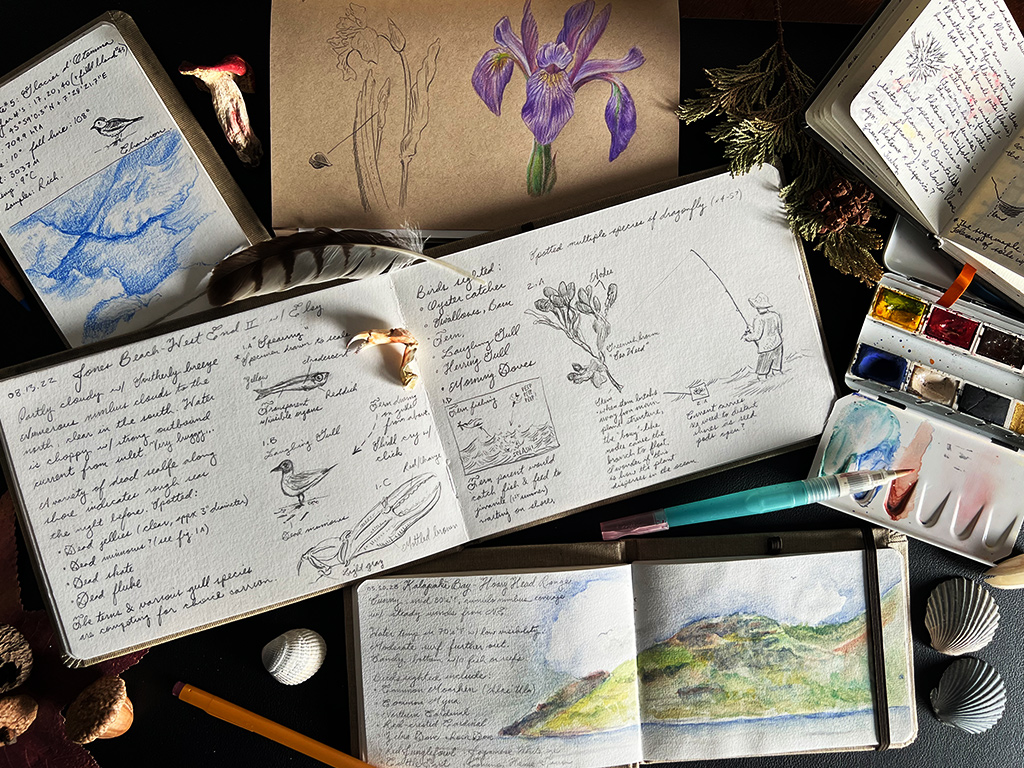
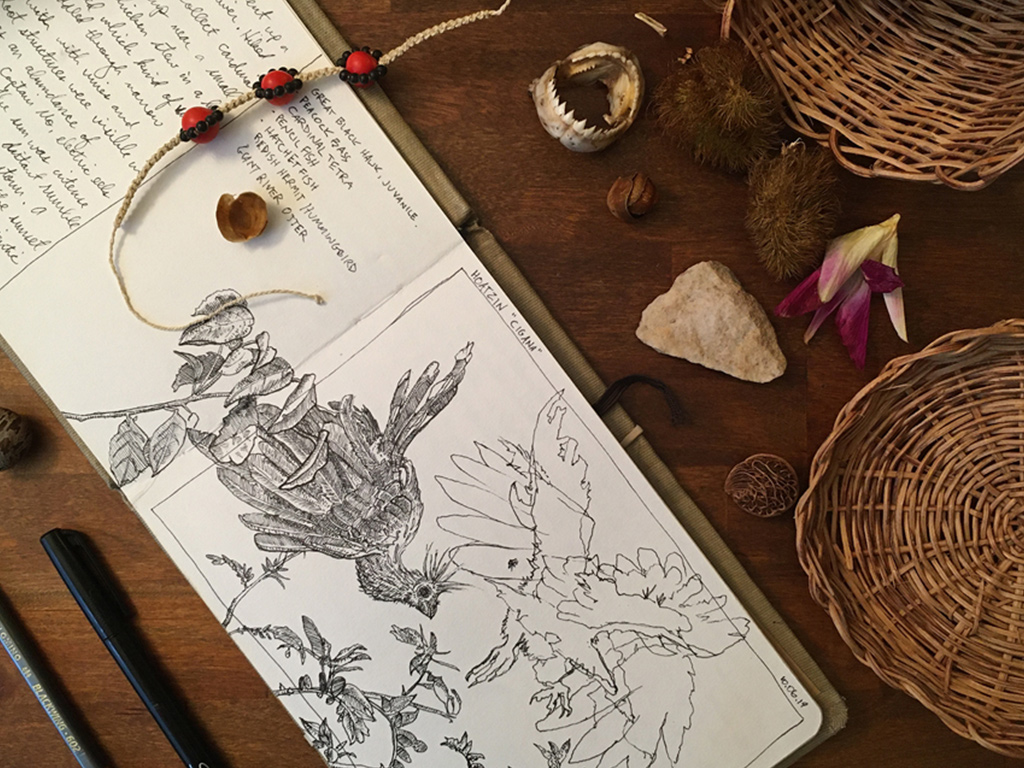
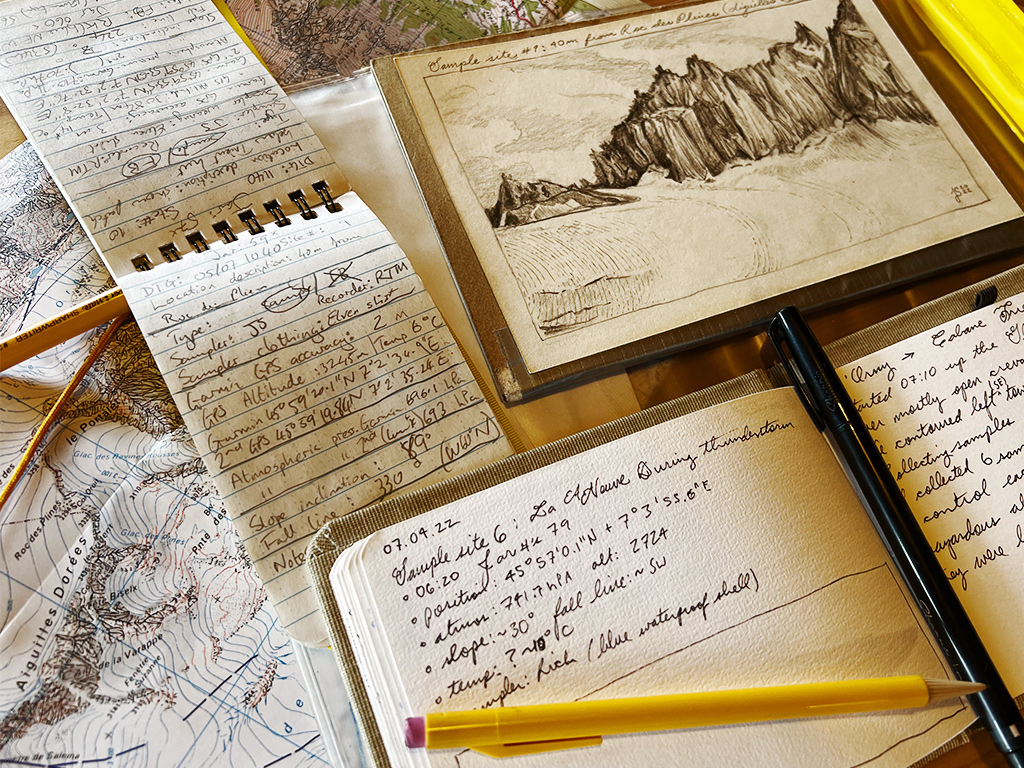
Nature Journaling has many formats.

My Nature Journaling Journey

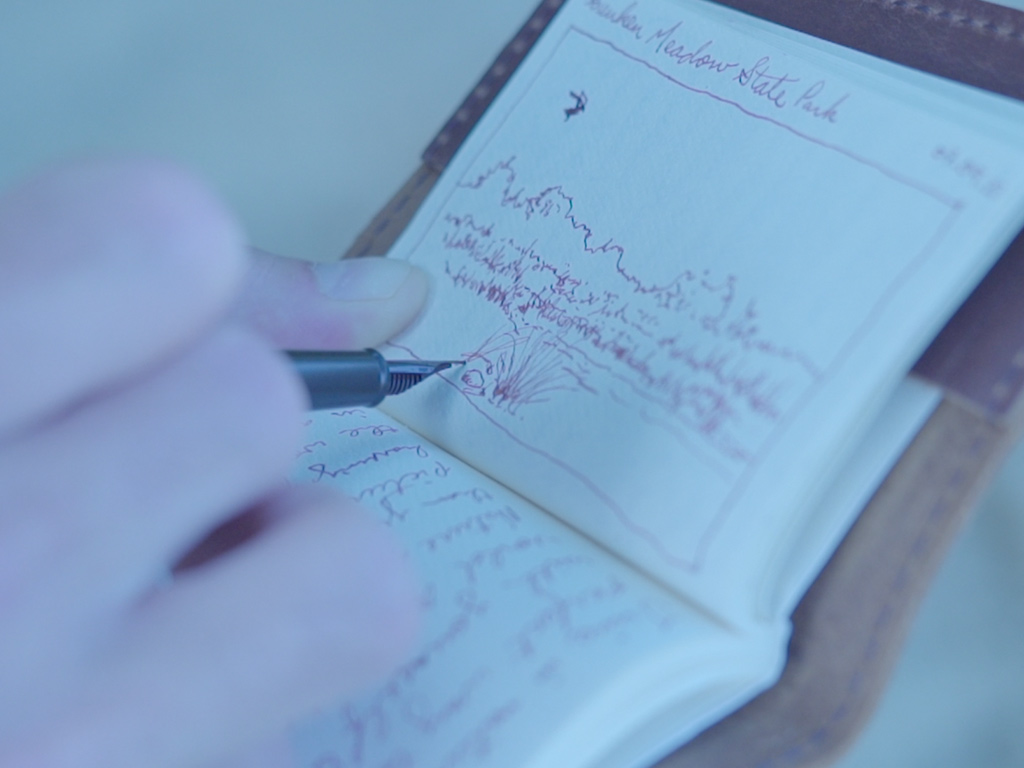
Back in 2020, when NYC shut down because of COVID, nature journaling simultaneously became my escape from lockdown and my masterclass in natural history. Every other day, I’d visit a local city or state park to observe and document two specific areas of interest that add enjoyment to my time outdoors. My focus was on learning about the local native plant and bird species. It was incredible how quickly I began learning about these subjects through direct observation! Before the year was through, I completed my first “dedicated” nature journal. Looking back, filling that nature journal was one of the most rewarding experiences I could have asked for during an otherwise difficult time.

Let Me Help You Start Journaling

Chances are that if you’re reading this article, you’re either curious about nature journaling or you’ve already hooked like me. Either way, my first piece of advice can apply to you. Rather than approaching this activity with broad strokes, I recommend selecting one or two main areas of interest that pique your curiosity enough to keep you coming back for more.

Your Nature Journaling Niche
nature-journaling-03

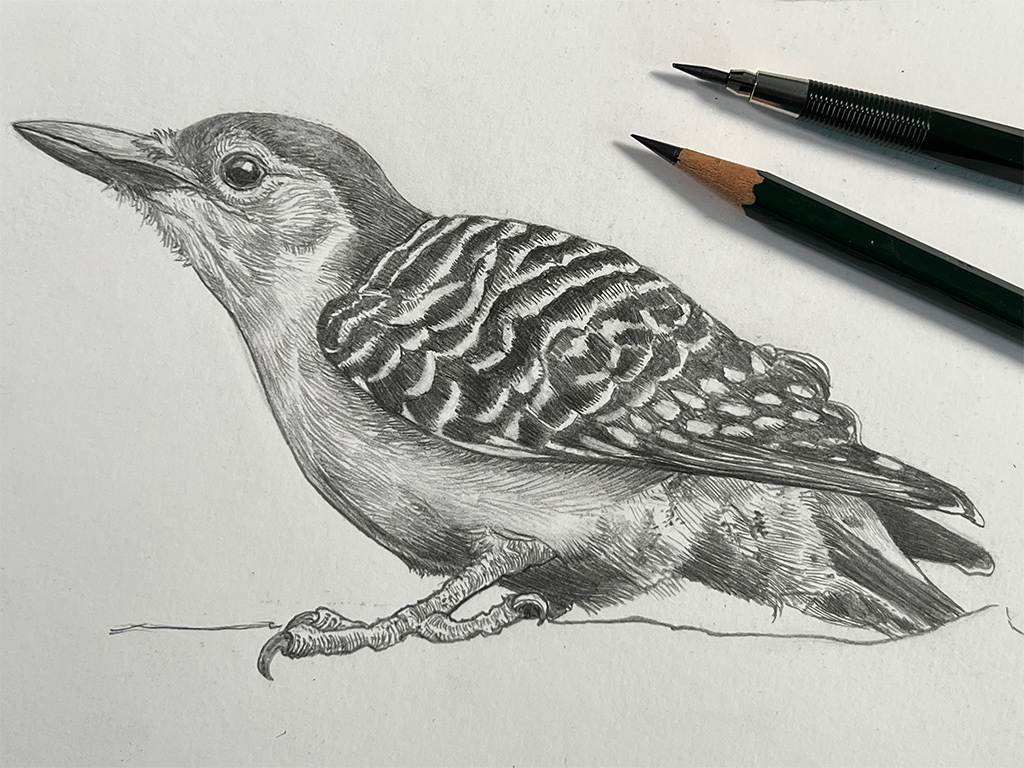
When considering your niche or area of interest, it’s essential to reflect upon your relationship with the great outdoors. Are you a hiker or wilderness guide? A hunter or gardener? A birder or fisherman? Maybe you’re none of the above, and this is your first time answering the call of the wild. Regardless of where you are today, let’s consider where you want to be tomorrow regarding your level of expertise.

Pro Tip:

“Start with a common subject that unifies the journal as a whole, such as a location or a season, rather than a specific plant or animal species.”

James Sisti

Tweet

Since there are countless starting points, discovering your niche provides an exciting subject to explore. This helps you maintain motivation while unifying your journals with a common topic or theme across multiple seasons and years. Not every nature journal requires a specific theme, however. A general “nature” theme is a great way to explore different topics simultaneously, allowing you to discover what truly fascinates you. If you prefer this approach, consider dedicating your observations to a location you often return to and record changes over time.

Examples of Nature Journaling Niches

  • Neighborhood bird habitats
  • Wildflowers in Spring (ephemerals)
  • Insect activity in your garden
  • Seasonal weather patterns
  • Varieties of fish in a nearby body of water
  • Woodland fungus varieties
  • Coastal wildlife 
  • Minerals and fossils
  • Wildlife tracks and migrations
  • Local native tree species

Assembling Your Nature Journaling Kit

nature-journaling-07
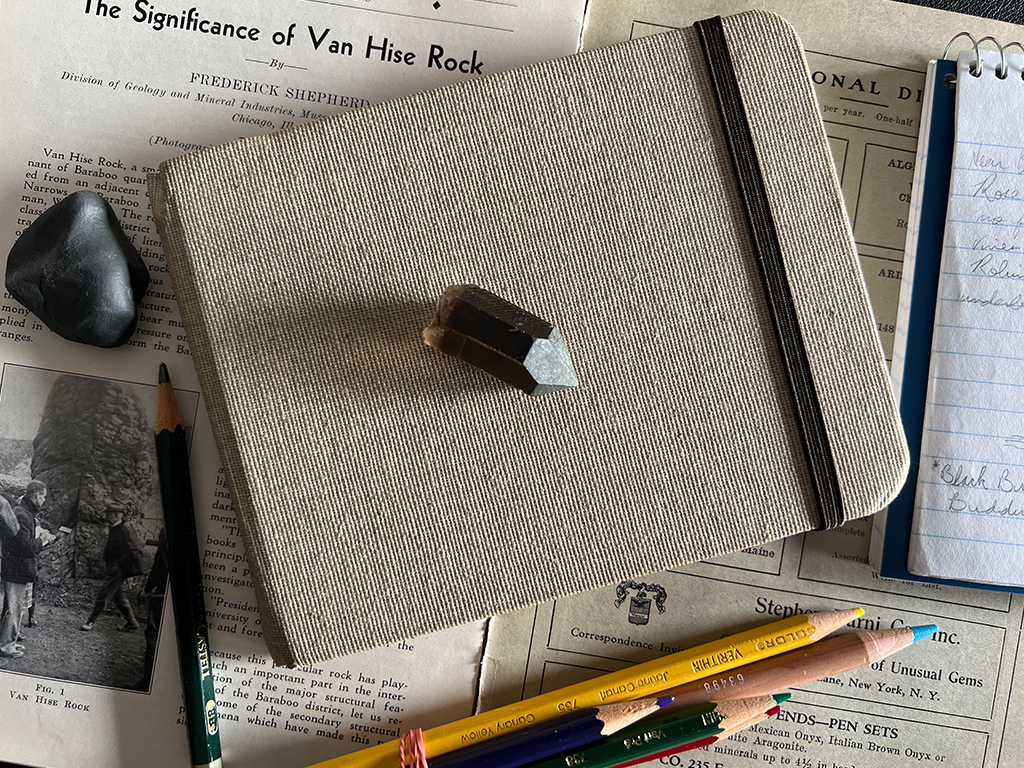
All you need to start nature journaling is a good notebook and a pencil! You can add from there.

Gearing Up with Goals in Mind

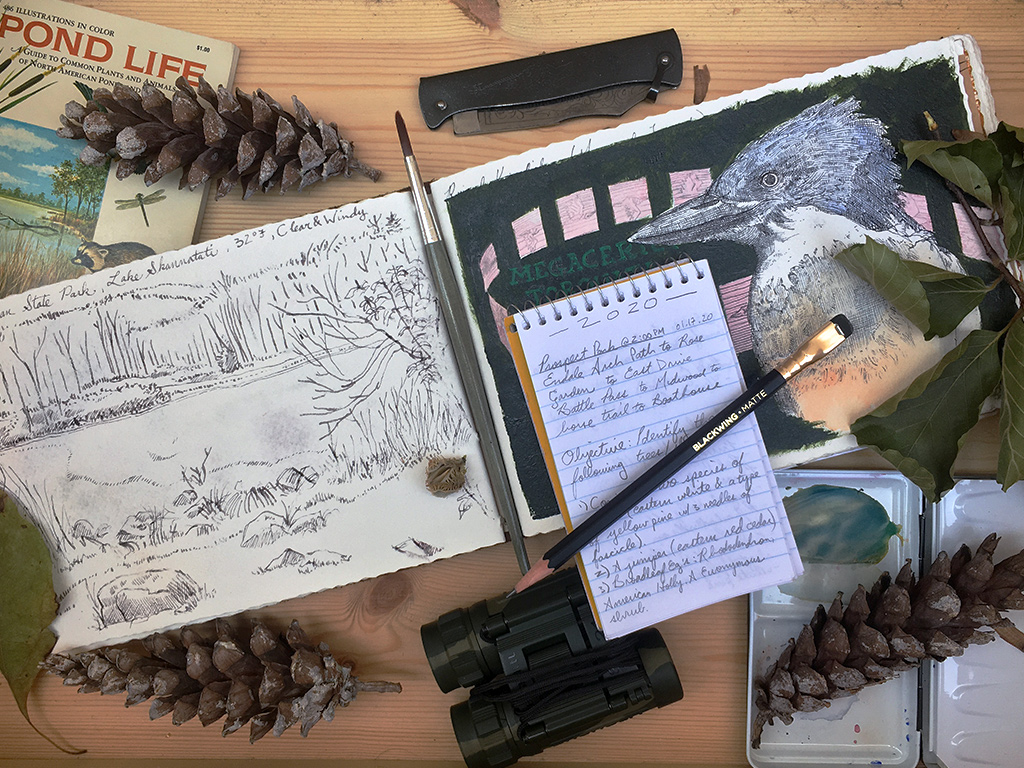
When it comes to nature journaling, there’s no one-size-fits-all format. Your journaling medium should complement your specific goals. For instance, a birder may prefer a bullet journal for quick entries on the fly, whereas an artist might prefer something more closely resembling a folio. Format options include sketchbooks, binders with hole-punched paper for easy editing, pocket notebooks, and multi-year calendars for tracking observations over time. Every nature journal is unique because it reflects the individual author’s thoughts and imagination, even if people use the same format or method. I wrote another article about assembling the best nature journaling kit.

Pro Tip:

“Keep a field journal for the quick-and-messy work and an at-home journal for edits, detailed observations, and final drafts.”

James Sisti

Tweet

Digital Resources

There are a variety of handy digital tools you can use, too. For example, mobile apps like iNaturalist and Seek help narrow the identification of plant and animal species while on the go. Some might find digital media distracting, so experiment with whatever tools provide the most value for your work. Also, it is important to consider that digital tools like this are only sometimes 100% accurate and can lead you down a false rabbit hole. Double-check your observations with a few specimens and a field guide. 

Helpful Nature Journaling Apps

  1. Seek: Seek is a nature identification app developed by iNaturalist in collaboration with the National Geographic Society. It uses artificial intelligence and image recognition technology to identify plants, animals, and fungi based on photos taken by users, providing instant information about the identified species and promoting nature exploration and learning.
  2. iNaturalist: iNaturalist allows users to identify plants and animals with the help of the community. Users can upload photos, and the app suggests identifications based on the visual data.
  3. PlantSnap: PlantSnap helps users identify plants, flowers, trees, and mushrooms by simply snapping a photo. It provides detailed information about the identified plant.
  4. Merlin Bird ID: Created by the Cornell Lab of Ornithology, Merlin Bird ID helps users identify birds by asking a few simple questions or analyzing a photo.
  5. Star Walk 2: Star Walk 2 is a stargazing app that allows users to explore the night sky and identify stars, constellations, and planets. It’s an excellent app for nature enthusiasts interested in astronomy.
  6. AllTrails: AllTrails provides detailed trail maps, reviews, and photos for outdoor enthusiasts. It’s useful for finding hiking and biking trails, as well as discovering new outdoor activities.
  7. SkyView: Similar to Star Walk, SkyView is an augmented reality app that allows users to point their devices at the sky and identify stars, constellations, and celestial objects.
  8. Leafsnap: Leafsnap helps users identify tree species by analyzing photos of leaves. It’s a handy tool for nature lovers and botany enthusiasts.
  9. National Park Service Apps: Various national parks have apps that provide maps, trail information, and details about the park’s flora and fauna. Examples include Yellowstone National Park and Grand Canyon National Park apps.
  10. MyRadar: MyRadar is a weather app that provides real-time weather information, including radar and satellite data. It’s useful for outdoor activities, especially hiking and camping.

Helpful Nature Journaling Websites

  1. National Geographic: National Geographic’s website offers a wealth of information about nature, wildlife, and environmental issues.
  2. BBC Earth: BBC Earth features articles, videos, and documentaries about the natural world and wildlife.
  3. The Nature Conservancy: This organization’s website provides information on conservation efforts, environmental news, and tips for sustainable living.
  4. Smithsonian’s National Museum of Natural History: The Smithsonian website offers educational resources, virtual tours, and information about various natural history topics.
  5. The Audubon Society: Audubon’s website focuses on bird conservation and provides valuable resources for birdwatchers and nature enthusiasts.
  6. Earthwatch Institute: Earthwatch engages people in scientific field research and conservation efforts around the world. Their website provides information about ongoing projects and how to get involved.
  7. ARKive: ARKive is a collection of multimedia profiles about endangered species, showcasing photos, videos, and facts about various animals and plants.
  8. The Dendro Lab: The Dendro Lab is an online masterclass, podcast, and in-person tree identification experience guided by master naturalist Carey Russell.

Choosing Your Nature Journaling Spot
nature-journaling-04
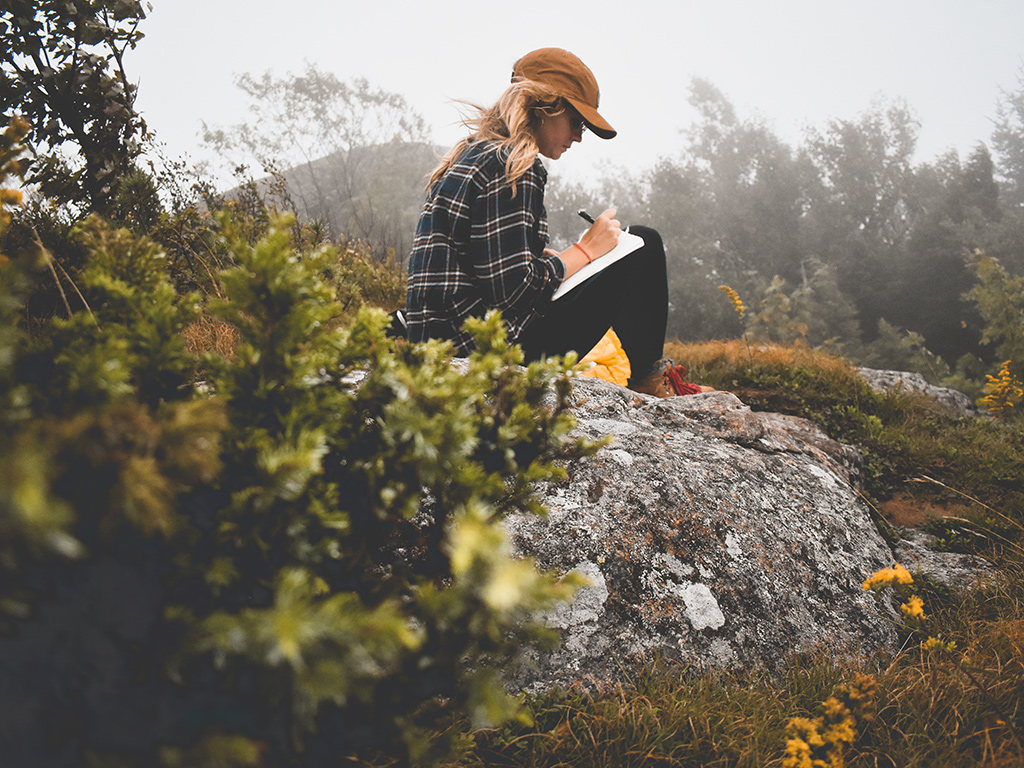
A great nature journaling spot is worth visiting over and over again.

Finding the Best Time and Place

Choosing the right time and place for your nature journaling practice can greatly enhance your experience. One of the biggest complaints of my hiking buddies is that I spend too much time jotting down field notes and not enough time walking. It’s important to separate your objectives if you’re tired of hearing comments from the peanut gallery. Here are a few pointers that have helped me get the most out of my time outdoors.

Journaling in Peace and Quiet

nature-journaling-05
A quiet bench in any park is a great starting point.

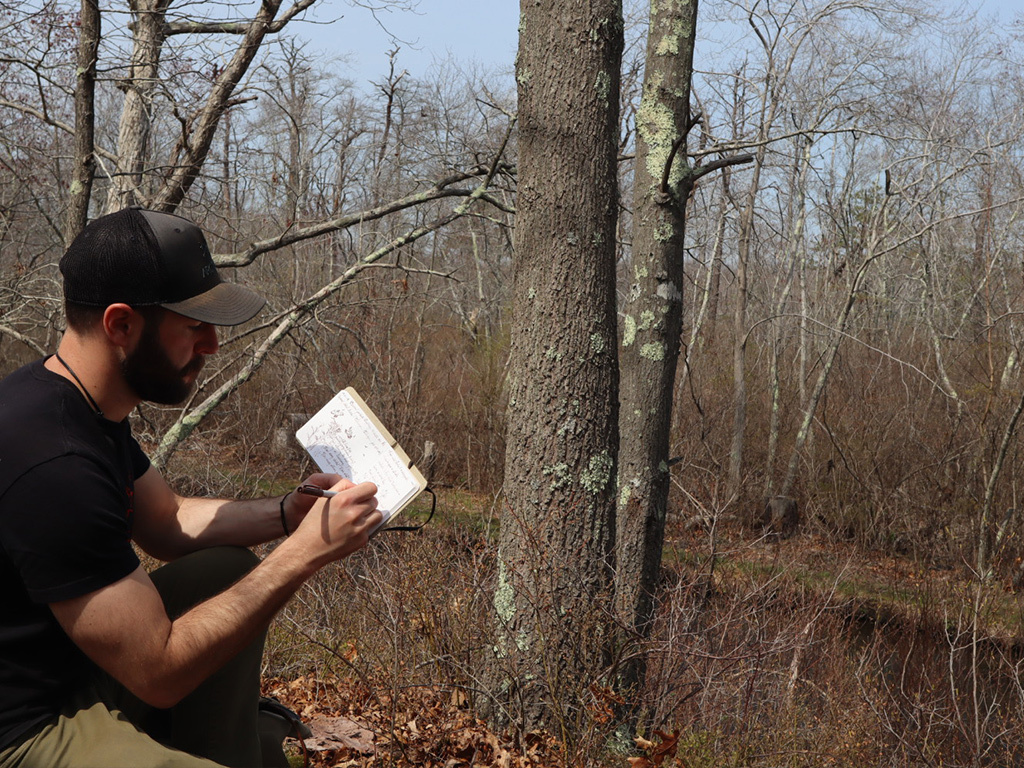
The goal is to find an ideal location that you can frequently visit. It helps when you enjoy spending time there. For example, I can’t stand when people bring portable speakers into a natural setting. Since I prefer to hear the sounds of nature, I often look for a secluded corner of a city park, a quiet community garden, a state park, or a nature reserve. A peaceful environment that allows you to connect with nature without distractions or interruptions is a huge benefit that shouldn’t be taken for granted. 

Look for a Spot that has Variety

nature-journaling-06
Look for a nature journaling spot that has a nice mix of terrain and wildlife.

A location that features a diverse range of natural elements is a nature journaling goldmine. When I lived in Brooklyn, I would often frequent Prospect Park, which boasts a variety of ponds and streams, forests, and fields. There was even a zoo! Having a variety of elements can provide you with an exciting menu of rich and inspiring subject matter for your journal entries.

Nature Journaling in Comfort

Ensure that you’re physically comfortable in order to focus on your observations. Weather-appropriate clothing is always a must for safety reasons, as well as any medication or dietary needs. Some folks go all in and bring a portable chair to sit on. I prefer a simple gardening pad that can fit easily inside by backpack. Having a good cover element, like an umbrella, might prove handy where shelter is scarce. Comfort is subjective when it comes to all outdoor adventures, but it pays to have these essentials in mind before heading out.

Pro Tip:

“Remember, the best nature journaling spot is one that resonates with you personally. Trust your instincts and choose a location that makes you feel connected, inspired, and at peace with nature.”

James Sisti

Tweet

Ways to Fill Your Nature Journal

nature-journaling-08
Nature Journaling and sketching are skills that go hand-in-hand.

Don’t Be Afraid of Making Mistakes

When I first started nature journaling, the biggest obstacle was myself. I had this ridiculous fear of “ruining” a new notebook, which caused me to miss out on all the fun! For example, if my handwriting wasn’t neat, if I made a spelling mistake, or if the sketch wasn’t good, I would either erase everything or tear out the page and lose all of my observations. Luckily, I’ve moved beyond my perfectionist tendencies and found a few practical techniques to help fill my nature journal. 

Adopt the Nature Journaling Mindset

It’s important to have the right headspace when approaching any creative endeavor, and nature journaling is no different. The mindset I propose you adopt is that of a natural history reporter. Your job is to collect as much data as necessary to learn something new. Collecting data can be challenging at first, so it’s essential to use a reliable and flexible system that will allow you to cover a wide range of topics without getting overwhelmed and disorganized. There are many methods for collecting and organizing data, but this simple system is an excellent foundation to build upon as you develop your practice.

Pro Tip:

“Adding ‘baseline data’ to your observations will link all of your nature journaling entries together, even if you are writing about different subjects!”

James Sisti

Tweet

Nature Journaling like a Pro

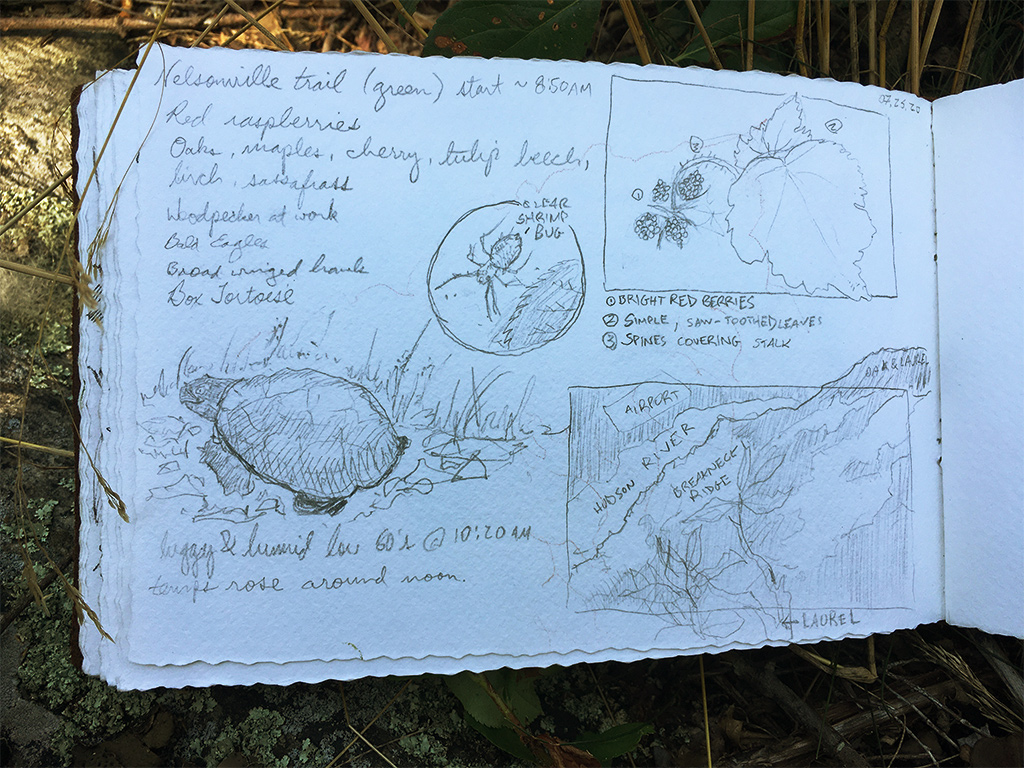
    1. Collect relevant data. Begin every journal entry by recording “baseline data,” or the minimum amount of data required to add scientific value to an observation. This consists of the date, location, *environmental conditions, and name of the subject you are observing. Baseline data links multiple journal entries over time and provides context for each recorded event. 
    2. Include Your Questions. It’s important not to shy away from documenting unfamiliar topics in your nature journal. Sometimes, this means ending up with more questions than answers, but don’t worry, that’s a good thing! When this happens, simply write down every question that comes to mind, just like a natural history reporter. Collecting questions is just as important as collecting answers. The baseline data I mentioned in Step # 1 provides a context for every “how?” or “why?” question you choose to include in your notes. This creates opportunities to add answers to these questions in the future. Consider sharing your questions with a knowledgeable naturalist, either online or at your local Audubon Society chapter, to expand your understanding of the subject. You can always conduct further research by visiting a library or browsing one of the websites I recommended earlier. 
    3. Include Visuals. Supplement your notes with visual media. Combining baseline data with art, photos, and specimens makes a nature journal come to life in a unique way. Never be intimidated by sketching in your nature journal! The act of sketching helps you to focus on a subject long enough to notice a detail that would otherwise remain unnoticed. Treat this purely as a method for collecting data. Your nature journal is meant to be a companion in good and bad weather. If you’re interested in creating a very art-centric nature journal, adjust your field kit by including a waterproof pouch or container that will help protect your artwork.
    4. Act like a professional when observing wildlife**. Read about the animals you want to observe before encountering them in the field. Learn the “do’s” and especially the “dont’s.” 
    5. Find a mentor or join a nature club within your niche. Socializing your research is an excellent way to gain valuable insight that might not be found online or in guidebooks. Also, consider how the benefits of camaraderie will add more enjoyment and consistency to your time in the field.

*Environmental conditions consist of the weather, temperature, and wind direction. Consider factors like proximity to water, terrain type, remoteness, and exposure to the elements.

**Observing wildlife is a special privilege that deserves the utmost respect. Don’t provoke an incident that can easily be avoided. Maintain a quiet and safe distance at all times. When in doubt, disengage and consult an experienced ranger or other authority figure.

Expanding Your Nature Journaling Practice

nature-journaling-09
Create beautiful memories by nature journaling!

Sharing What You Learn

Assuming that you’re interested in putting the previous sections of this article into practice, how do you think nature journaling will change the way you experience the outdoors? Consider how each moment of wonder and inspiration will make its way onto the pages of your journal and how they will be preserved as endearing memories. Now consider how sharing your journal could inspire others to make their own memories in nature! 

Nature journaling begins with a personal call to experience the outdoors more intentionally. It fortifies your education through direct observation and develops your skills through personal experience. This practice helps you develop a keen eye for exciting natural phenomena, putting you in a position to share what you’ve learned with others over time. Now, here are a few ways that your nature journaling practice can broaden to reach members of your family, friends, and future generations.

  • Mentor a young naturalist  
  • Lead a nature walk with family and friends
  • Contribute to a citizen science project
  • Contribute articles to magazines within your niche
  • Volunteer to assist with nature-based projects or merit badges for a local scout troop 
  • Give a talk at a local forum, like a public library, park, nature preserve, or a bookshop

Nature Journaling Guidebook Sample

nature-journaling-10
Drawing a landscape can teach you a lot about it! Photo by Zoe Salt ©2022

After years of research and hard work, I’ve put my very best into writing even more helpful nature journaling tips included in this FREE downloadable field guide sample. Download a sample of my new guidebook, “A Field Guide to Nature Journaling,” today and learn how to add more value to your time in the great outdoors while improving your knowledge and skills.

More Nature Journaling Resources

Nature Journaling is a novel way to memorialize your adventures in the great outdoors. Even as a hobby in its own right, nature journaling has made my time in nature more enjoyable and has taught me how to be a more observant artist and hiker. It feels extraordinary to have a shelf full of personal experiences in nature to return to in my professional work. Still, even more so, I can share these experiences with my friends and loved ones. 
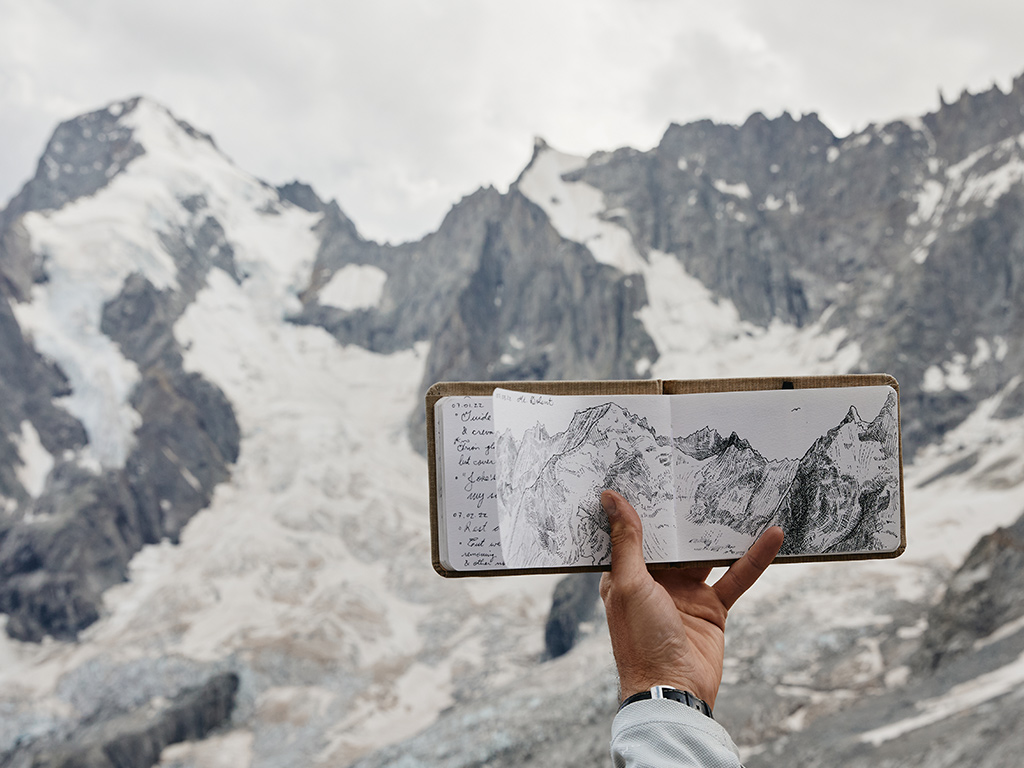
The Power of Nature Journaling in Citizen Science

Whether you live in the Alps or in the middle of a concrete jungle like me, you can start contributing to citizen science research efforts by nature journaling! Help jumpstart your involvement with this FREE DIGITAL NATURE JOURNALING GUIDE SAMPLE!

01 Nature Journaling in Citizen Science

Hike And Draw LLC is a participant in the Amazon Services LLC Associates Program. As an Amazon Associate, your use of my affiliate links helps support my work. Thanks in advance!

The Intersection of Nature Journaling and Citizen Science

02 Nature Journaling in Citizen Science
Your Nature Journal is a Mobile Laboratory

Definition of Nature Journaling

Nature Journaling is a different experience than keeping a diary or a sketchbook. Those who participate in nature journaling have the intention of memorializing their firsthand experiences in nature by blending a desire for knowledge with a deep affection for natural history.

A nature journal is a place to cultivate curiosity, record data, ask questions, and share thoughts. It is a mobile laboratory where an individual might gain mastery over their powers of accurate observation and their understanding of how natural systems operate.

Importance of Citizen Science in Scientific Research

Since the beginning, our ancestors have ventured out into nature in search of answers. Those who were fortunate enough witnessed unexplainable phenomena that were both startling and intriguing. This created a need to understand, which gave rise to more intentional observations over extended periods of time. These observations, combined with repeatable experiments, gave birth to what would become the modern sciences. 

The journals of accomplished explorers and natural historians, many of whom were enthusiastic amateurs in the beginning, connect many important observations like pearls on a string, threaded carefully and intentionally through the ages. Combined, these discoveries form a logical and cohesive whole, a shining jewel which adorns its wearer with a wealth of generational knowledge, (fancy, right?). This is where the rich tradition of Nature Journaling intersects with the modern “Citizen Science” movement.

Pro Tip:

“One does not require a university degree to conduct valid research. Even children can participate in citizen science!”

The problem with spending the broad majority of time in a lab is that projects become more and more detached from their sources. The need for relevant, real-time data is more important for research now than ever before! As such, scientific research teams from the university level to the Smithsonian Institute, have realized the value of tapping into the vast networks of local nature enthusiasts and subject matter experts for their data collecting needs.

Having an army of “Citizen Scientists” to help record data in the field helps keep projects more connected to real time field observations. Strict data collection guidelines help ensure that the observations being submitted by citizen scientist volunteers are up to standard. Even children can participate in citizen science!

The Basics of Nature Journaling

03 Nature Journaling in Citizen Science
All you need to start nature journaling is a good notebook and a pencil! You can add from there.

Tools and Materials for Nature Journaling

Nature Journaling is one of the most inexpensive hobbies to try! All you need to get started is a notebook and a pencil. There are many varieties of nature journals, but no superior format. That being said, there are some guidelines you should follow since each format should match your specific goals (more on this, later). For example, a watercolorist might select their journal based on preferences that might not be ideal for a photographer. Some format ideas include sketchbooks, binders with 3-hole punch paper, (for quick editing and page swapping), pocket notebooks, and multi-year calendars, (for comparing observations over long periods of time).

The Role of Artistic Expression in Nature Journaling

No two nature journals are exactly alike. Even if everyone used the same format or method, each journal would be unique because its contents are filtered through the lens of the individual author’s thought-process and imagination. Personally, I love drawing in my nature journal. This might sound intimidating to a non-artist, but I’ve developed a great way to start including sketches in your journal, even if you can’t draw a straight line!

free_trial_image-3
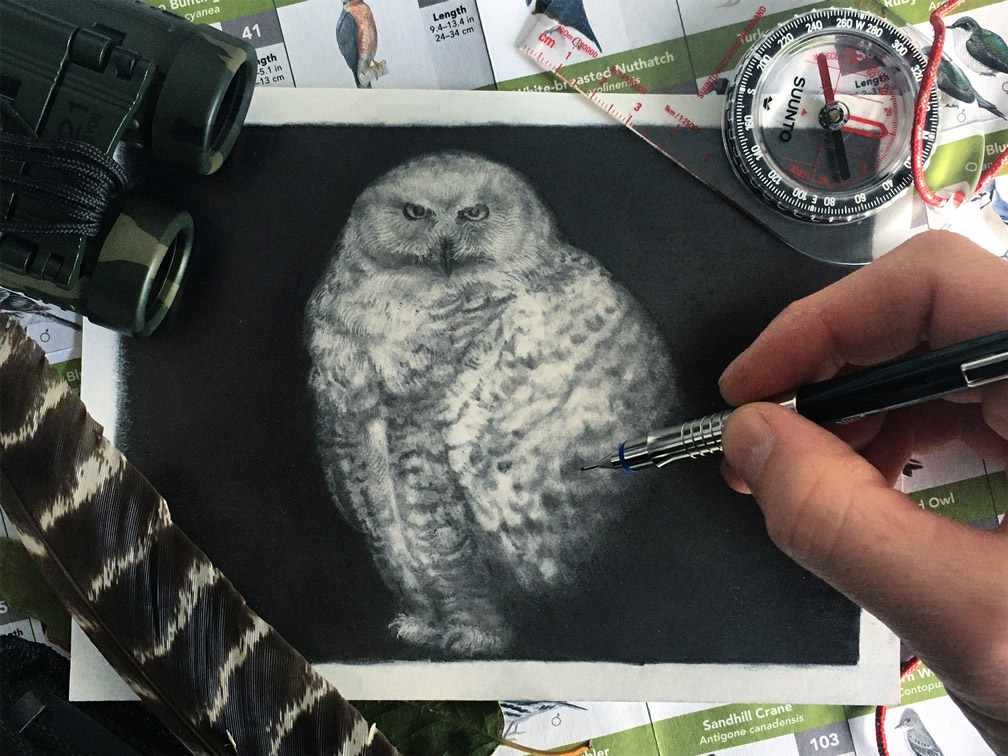
Drawing helps you notice what you might normally not see! Snowy Owl in by James Sisti

Including field sketches not only provides a relatable context for your observations, drawing has also been scientifically proven to improve memory and focus. The act of drawing is also a great way to intentionally focus on something long enough to learn something new about it. This means that the finished drawing itself isn’t so much the reward for your effort, but rather the time spent creating in nature and the learnings gained from that experience.

Nature Journaling like a Scientist

Gathering and recording data are wonderful byproducts of nature journaling. This is especially true if you have a specific area of interest that makes your time in nature more enjoyable. Let’s call this area of interest your “niche”. It’s important to spend a moment reflecting on this. 

Start by considering your relationship with the great outdoors. Are you a hiker or wilderness guide? A hunter or bushcrafter? A birder or dendrologist? Maybe you’re none of the above and this is your first time answering the call of the wild. Regardless of where you are today, let’s consider where you want to be tomorrow, in terms of your knowledge, and focus on the future.

Pro Tip:

“Start with a common subject that unifies the journal as a whole, such as a location or a season, rather than a specific species of plant or animal.”

Since there are countless starting points, discovering your niche provides you with an exciting subject to explore. This helps you maintain motivation while unifying your journals with a common subject, or theme, across multiple seasons and years. Not every nature journal requires a specific theme, however.

A general “nature” theme is a great way to explore different topics at once, allowing you to discover what truly fascinates you above all else. If you prefer this approach, consider how your observations could be dedicated to a single location you return to often and record changes over time. Your back yard or a nearby park is a great place to start!

The Role of Nature Journaling in Citizen Science Projects

08 Nature Journaling in Citizen Science
It’s a great idea to have a non-digital backup of your field observations.

Citizen Science: A Bridge Between Nature Journalists and Scientists

The majority of modern smartphones have a built-in camera and a connection to the internet. This means that anyone is capable of capturing data in real-time and uploading it to a database. This is what makes Citizen Science such a valuable data collection tool for scientists. Considering the type of project and the level of complexity, this could mean that hundreds of volunteers could participate in a project, worldwide!

Plus, the additional benefit of having a team of citizen science volunteers means that some projects no longer need to provide a field team with expensive recording equipment. What a deal! Research teams are not the only people who benefit in this relationship, however.

Today, there is such a diverse variety of research projects in which to become involved that nature journaling has never been a more exciting hobby. Imagine your nature journal observations being included in actual scientific research! 

05 Nature Journaling in Citizen Science
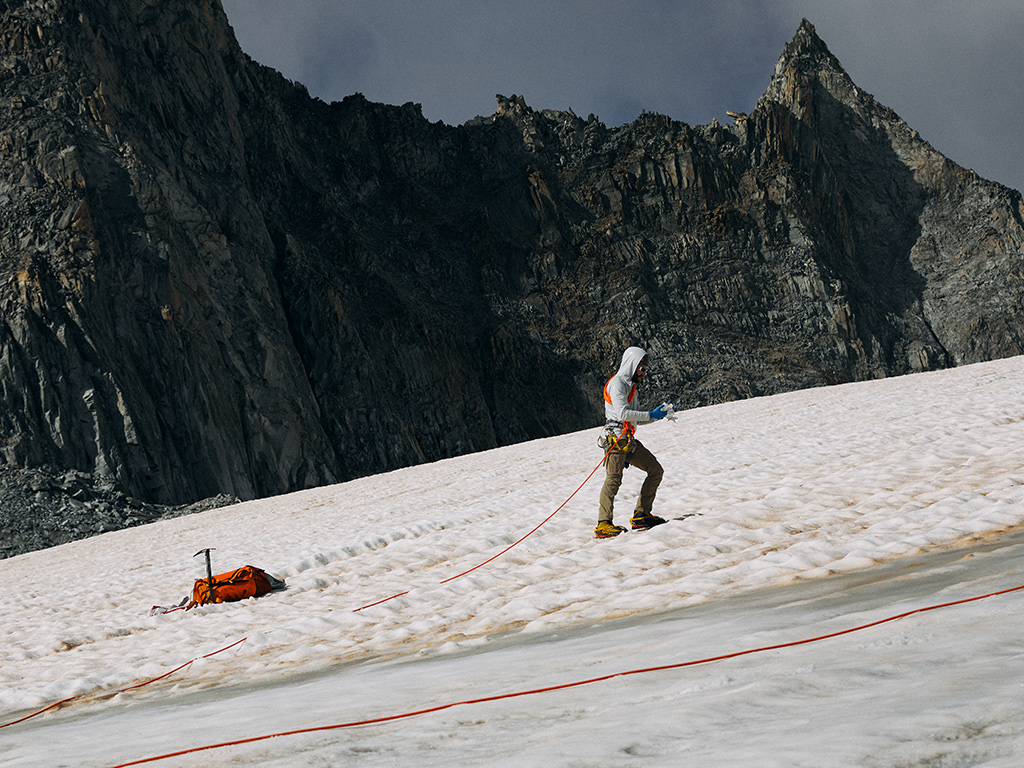
Me sampling snow from Glacier D’Orny in the Swiss Alps.

My Journal’s Role in a Successful Citizen Science Initiative

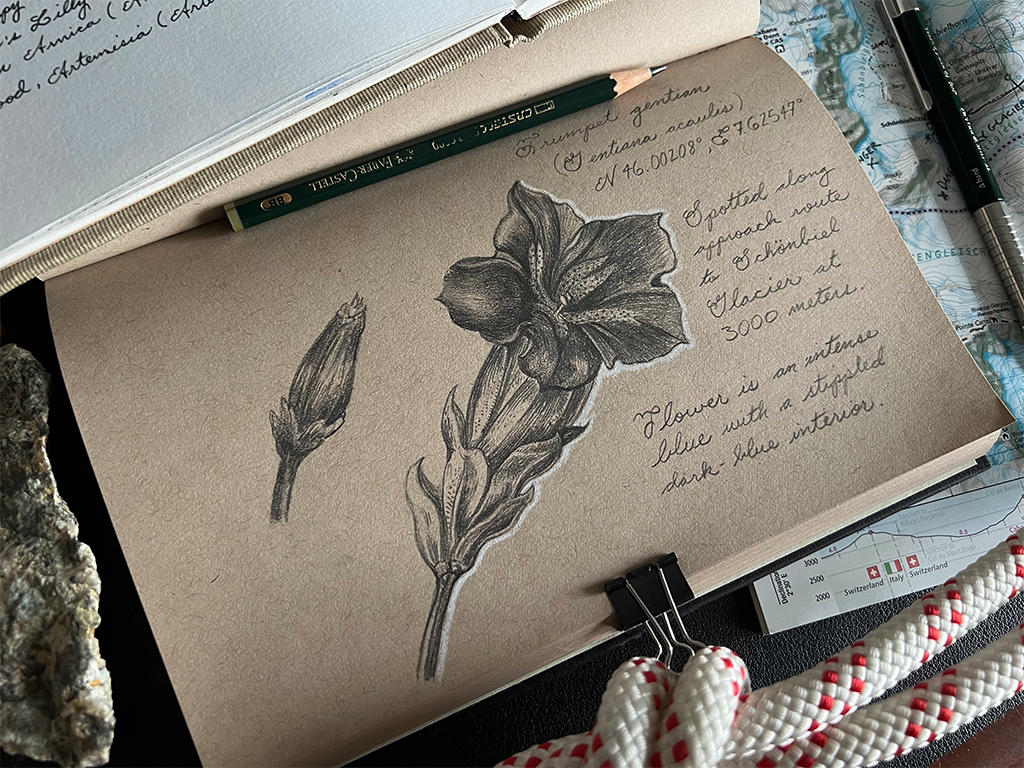
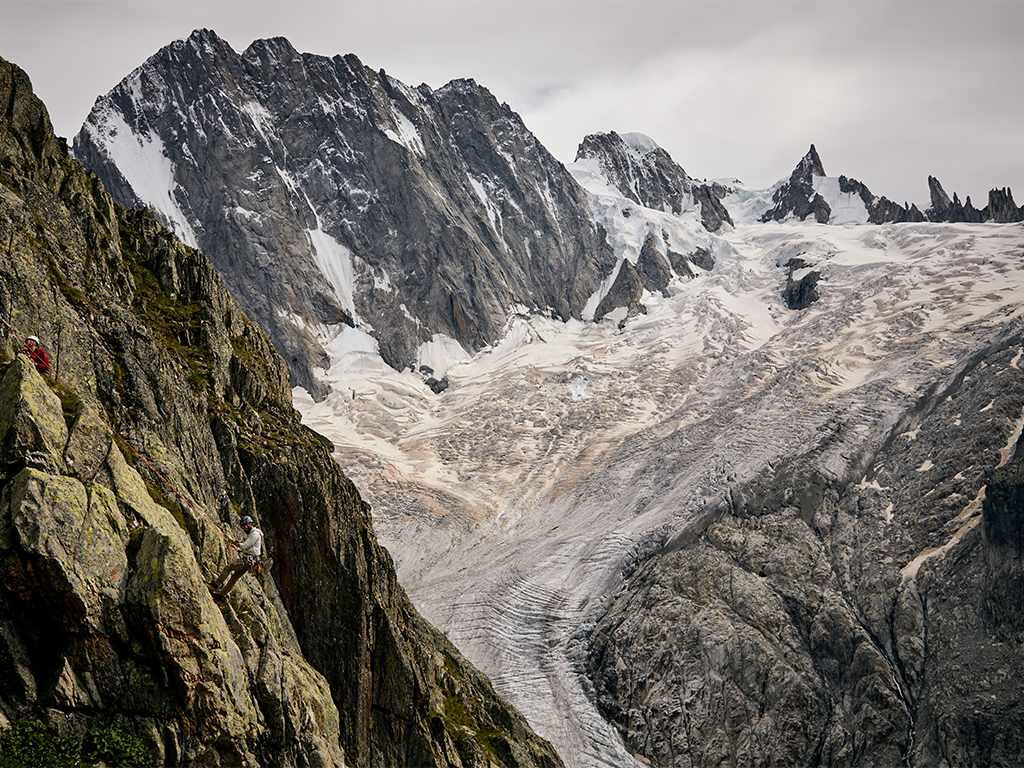
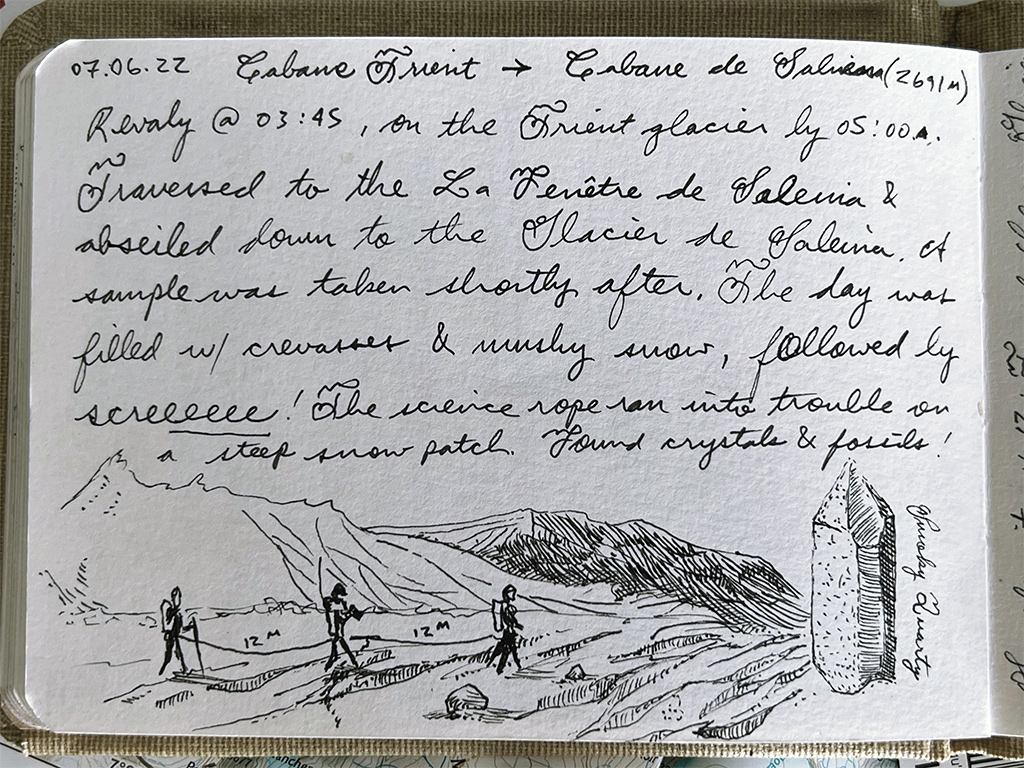
I was actually fortunate enough to become included in a high altitude climate survey of the Swiss/French Alps. The 2022 HLR Expedition project was started by Dr. Al Gill and Robin Milner. Initially they were just curious as to whether the historic High Level Route route was still viable after 160 years of climate change. As plans developed, the team’s ambitions grew to encompass our work as citizen scientists and communicate what environmental change looks like at altitude. 

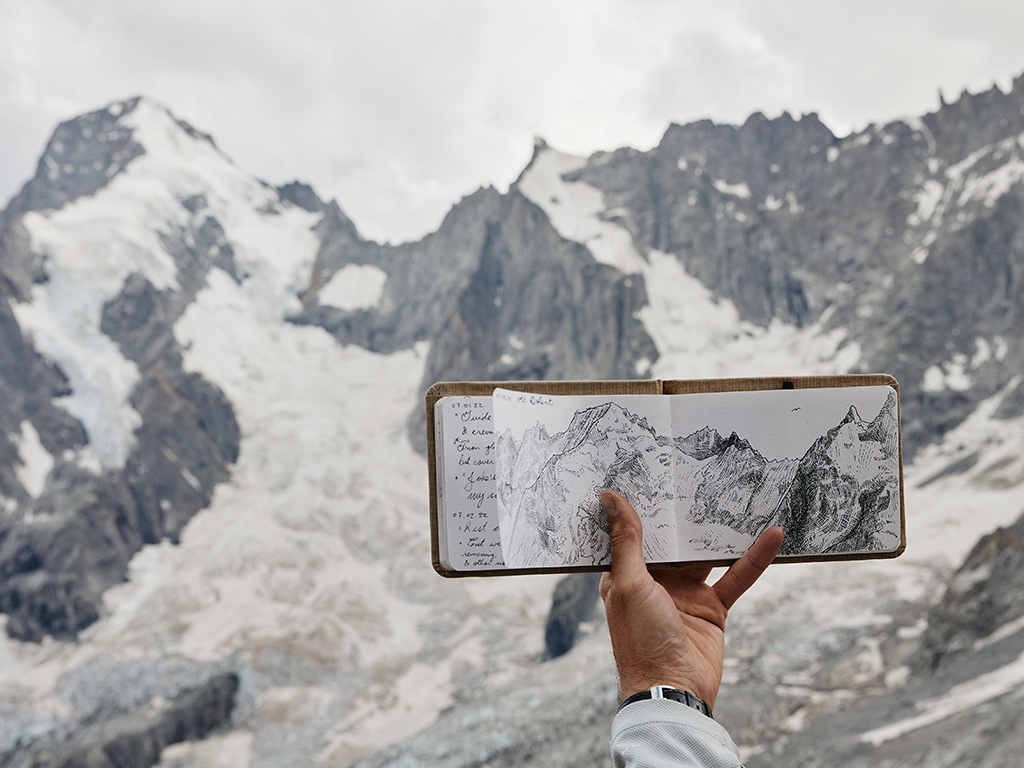
The data-rich observations recorded in my nature journal, combined with Zoe Salt’s incredible photography, helped to convey the reality of alpine global warming, while simultaneously creating deep personal connections to the natural world.

09 Nature Journaling in Citizen Science
Extreme nature journaling while dangling above Glacier de Leschaux. Photo by Zoe Salt ©2022

How Nature Journaling Contributes to Scientific Research

06 Nature Journaling in Citizen Science
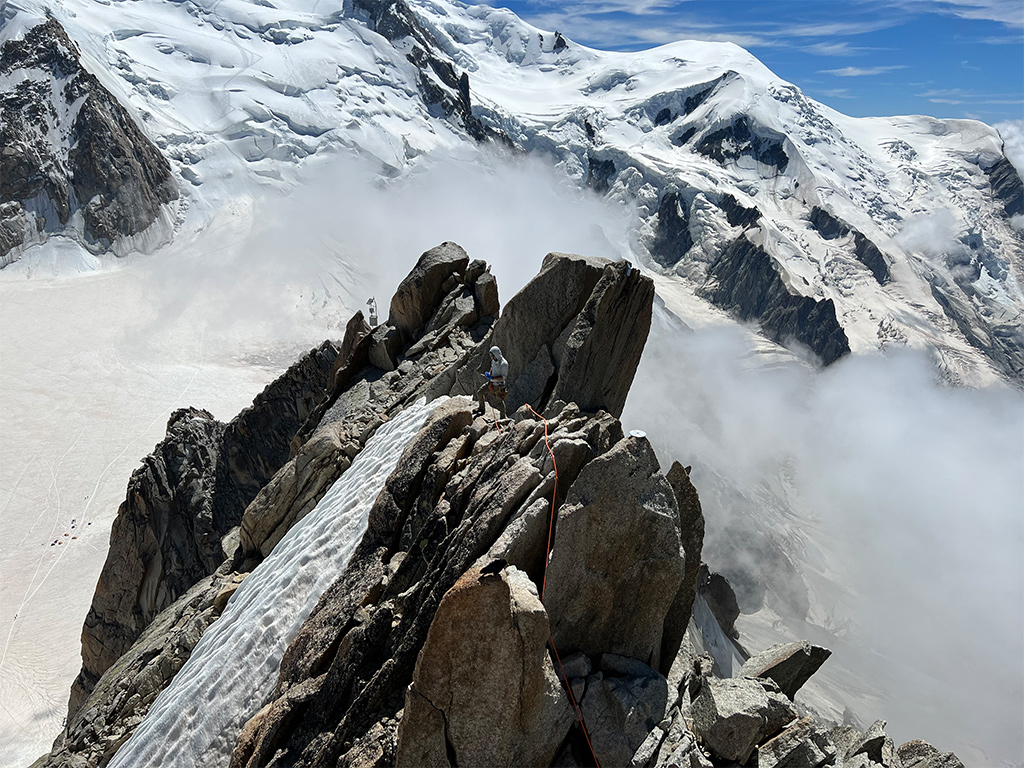
Sampling snow at 3800 m. from the Arete des Cosmiques with Mont Blanc in the background

Nature Journaling Captures Long-term Observations and Patterns in Nature

Earlier, I described a nature journal as “a mobile laboratory”. While on expedition, I not only recorded data from scientific sampling sites, I made sure to include a minimum baseline of relevant data with every field observation. Now let’s shift this example to you. 

Imagine if you simply looked out your window every morning, taking note of various happenings before going about your daily routine. Now if you were to record, for example, what the sky looked like every morning for a year, you would actually have a pretty concise set of observations. 

Pro Tip:

“Adding ‘baseline data’ to your observations will link all of your nature journaling entries together, even if you are writing about different subjects!”

What would make these observations even more robust would be adding these “baseline data” elements: the date, time, location, and temperature. With these additional elements, you have created an accurate database of seasonal weather patterns in your specific area. If you did this every day for 5 years, you would be the local weather expert! A great example of this kind of practice in action is written about in one of my favorite books: “A Sand County Almanac by Aldo Leopold”.

This practical application of daily nature journaling can contribute to citizen science projects in almost every field. One project that is just out of this world, involved a citizen science collaboration with NASA that resulted in the discovery of a system of five planets outside of our solar system. The sky is apparently not the limit! (I’ll stop with the space puns, now).

Every Nature Journal Counts in the World of Citizen Science

10 Nature Journaling in Citizen Science
Narratives, combined with data will make your observations more memorable.

Start Your Nature Journaling Journey

Hopefully, this article provides you with a good perspective of how nature journaling can be a great way to contribute valuable data to scientific research. Even as a hobby in its own right, nature journaling has made my time in nature more enjoyable and has taught me how to be a more observant artist and hiker. It feels very special to have a shelf full of personal experiences in nature to return to in my professional work, but even more so, I can share these experiences with my family. 

The potential for having a profound impact on a global scale begins by building bridges between individuals through shared experiences. Participating in citizen science projects not only adds immense value to your time in nature, but also helps scientists around the world to conduct important research at a massive scale. Who knows? Maybe your nature journaling practice will help future generations connect with the great outdoors in some wonderfully unpredictable way.  

Helpful Nature Journaling and Citizen Science Resources for You

11 Nature Journaling in Citizen Science
Drawing a landscape can teach you a lot about it! Photo by Zoe Salt ©2022

I hope you found this article helpful! I’ve added even more helpful nature journaling resources to this FREE downloadable field guide sample. Subscribe and you’ll get helpful nature journaling techniques to try on your own in nature!

MORE Nature Journaling and Citizen Science Resources

A great resource for learning about nature systems is the Tristian Gooley Collection. This series of books not only made me a much better wilderness guide, they also helped me see nature through a completely different lens. You’ll also want to check out the work of naturalist, artist and teacher John Muir Laws. Another great book to check out is The Invention of Nature by Andrea Wulf. If this doesn’t inspire you to start nature journaling, I don’t know what will!

I already wrote an article recommending my favorite nature journaling supplies, but in case you want to get started right this second, I recommend getting a really nice hardcover sketchbook by Hahnemuhle. This is the Rolss-Royce of sketchbooks in my opinion. Believe me, I’ve gone through A LOT of different brands and this one consistently stands the test of time, (and rain).

Speaking of rain, if you’re the kind of person who would rather carry a pocket sized notebook designed for all manner of weather, check out the Rite in the Rain weatherproof products. If that’s not your speed and you want to take “sexy” to a whole new level, you can mimic me and put your nature journal in a waterproof waist pack. One time, a trip got really sad when my journal got ruined in the rain. Don’t be that person! 

If you made it this far, chances are your mouth will water at the idea of having a fancy leather nature journal. Fear not, I have been using Rustico products for years, and although I don’t recommend them for field work, I absolutely recommend them as a “at home” or more “sophisticated and refined” version of your field notes.

Finally, if you want a little more guidance and inspiration for your nature journaling journey, check out my Introduction to Nature Journaling – Online Workshop. Thanks again for reading!

instructor james sisti

How to Draw Beginners [FREE INTRO]

How to Draw Beginners is a FREE drawing intro that not only explains HOW to start drawing, but how to find WHAT to draw, as well. Try this proven drawing system and put your skills to the test.

how to draw beginners 06

Learning how to draw can be overwhelming, which is why so many of us either practice drawing in secret or avoid it entirely. That’s why I put together this handy step-by-step intro entitled “How to Draw Beginners”. Chances are, when you were a kid, drawing was something you purely did for fun. Let’s start there.

I want to invite you to participate in a hobby that has added so much value to my adult life, especially where my adventures and family memories are concerned. If you take the time to practice this system, you will be able to draw anything, and I sincerely mean that. All you need is a pencil and some blank paper. I’ve even created a list to show you how to build your own pencil drawing kit. 

How to Draw Beginners

About 10 years ago, I reached a point where I needed a creative outlet in my life. My career eclipsed many of my non-work interests, so this outlet needed to be something that was fun, accessible, and not very time consuming. I had kept sketchbooks throughout college, and although I wasn’t a particularly good artist, this hobby was perfect for keeping track of ideas, documenting experiences, and enjoying my downtime creatively. I decided it was time to start drawing again. The only question was “what should I draw?”.

What Do Beginners Draw?

how to draw beginners 0

Finding a good subject to draw is like a scavenger hunt. The best thing to draw is what excites you the most, right? However, if that’s not immediately available, or your skill set is not quite there yet, your next best bet is to practice by drawing whatever is in your pockets or on the ground. I sincerely believe that drawing from life is the best place to start practicing. Consider the value of drawing an object from nature such as a feather or leaf. These are great 3D objects for warm-up exercises. In fact, my students and I still warm up for class by drawing nature objects together.

Pro Tip:

“If you can’t find a good 3D object to warm up with, you can search for references using free stock photos online.”

There are a variety of free stock photo sources, such as Pexels and Unsplash

Every Beginner Can Draw a Dot

how to draw beginners 1

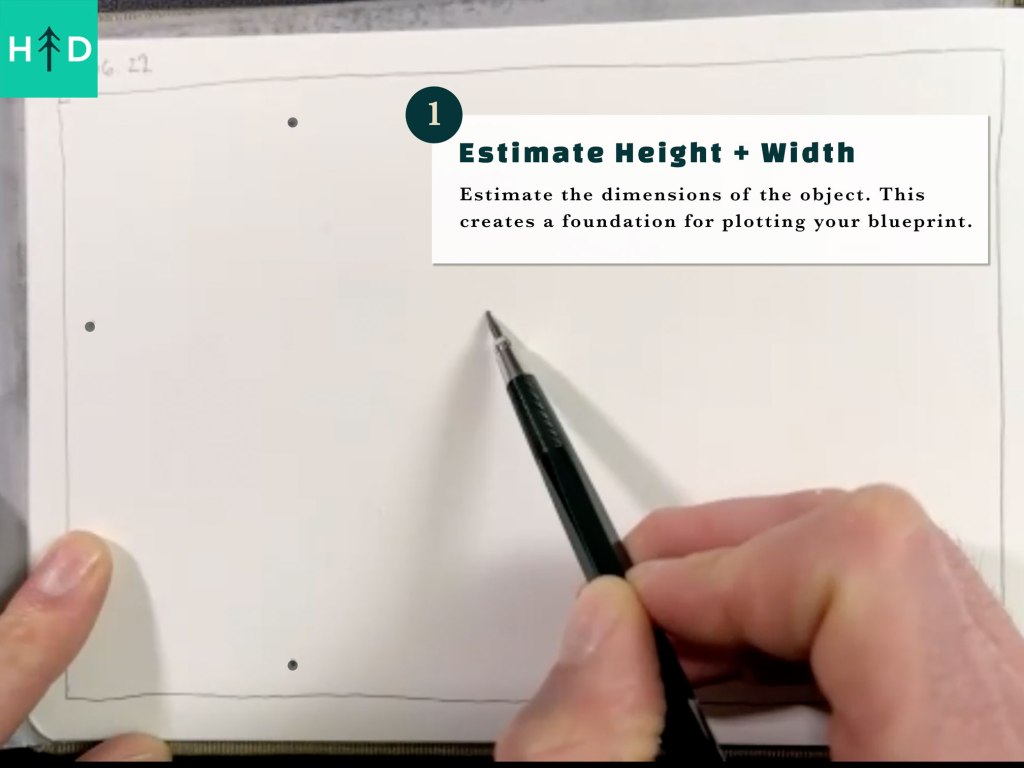
Seriously, anyone can draw a dot, even if you can’t use your hands! So what’s your excuse? Let’s start by assuming we just picked up nice looking leaf to practice with. The first step in beginning to draw is to estimate the height and width of the object. Don’t aim for perfection. Instead, make approximate measurements using only 4 dots, 2 for the height and 2 for the width. This creates a foundation for plotting your blueprint. Every good idea needs a plan, right?

Every Beginner Can Draw a Blueprint

how to draw beginners 2

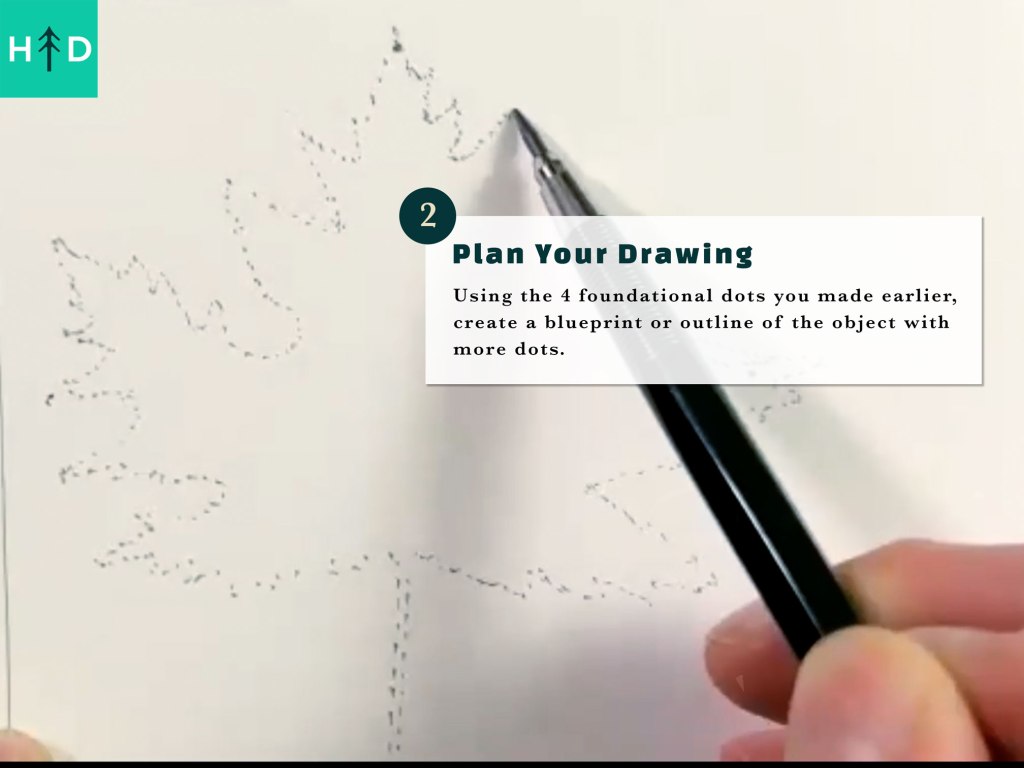
Not a single building is constructed without a blueprint. The same concept is true for constructing a drawing. Using the 4 foundational dots you made earlier, we will now create a blueprint or outline of the object with, you guessed it, more dots! This is still the planning phase of your drawing, so again, don’t try to be perfect. If something looks off, you can actively edit your blueprint without even erasing. This is crucial! Always feel comfortable with the fact that you can actively edit your work at any point. Don’t feel bad about it, either.

Every Beginner Can Draw a Line

how to draw beginners 3

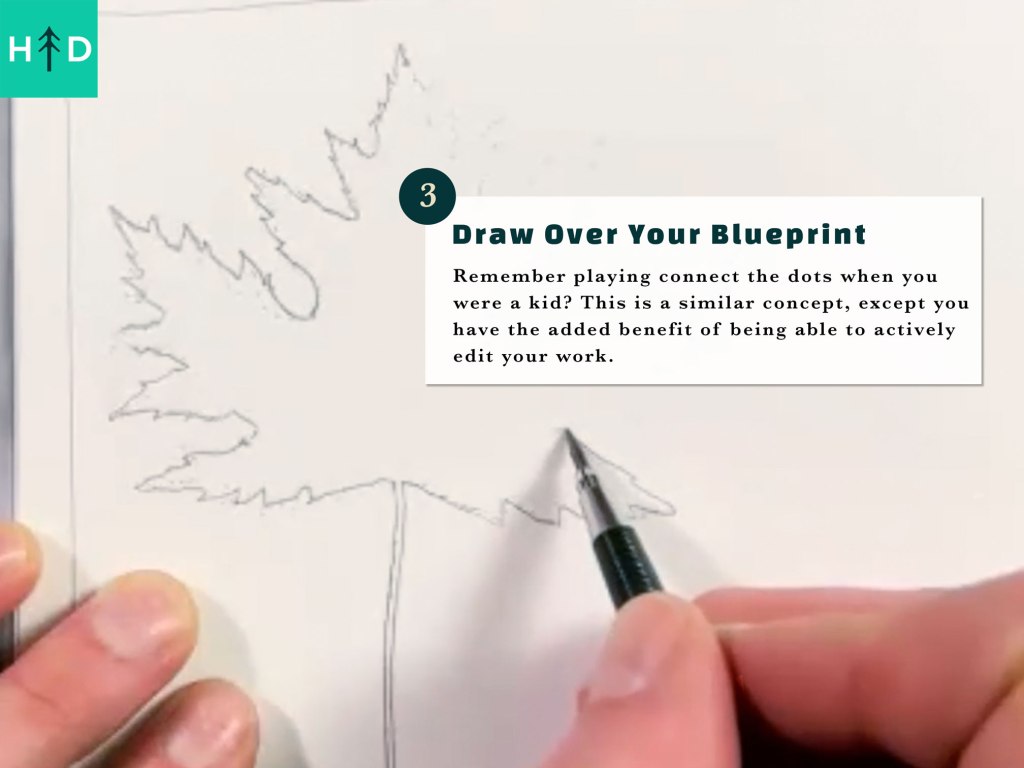
Remember playing connect the dots when you were a kid? This is a similar concept, except you have the added benefit of being able to actively edit your work. There are moments when I realize that my blueprint is a little off, so rather than trace over a mis-measurement, (because that’s what it is), I actively edit my work by drawing the line where it needs to be, instead. I do this all the time with zero shame!

You can see this concept in action by watching my FREE video tutorial “How to Draw an Easy Mountain Scene“.

How Every Beginner Can Draw

how to draw beginners 4

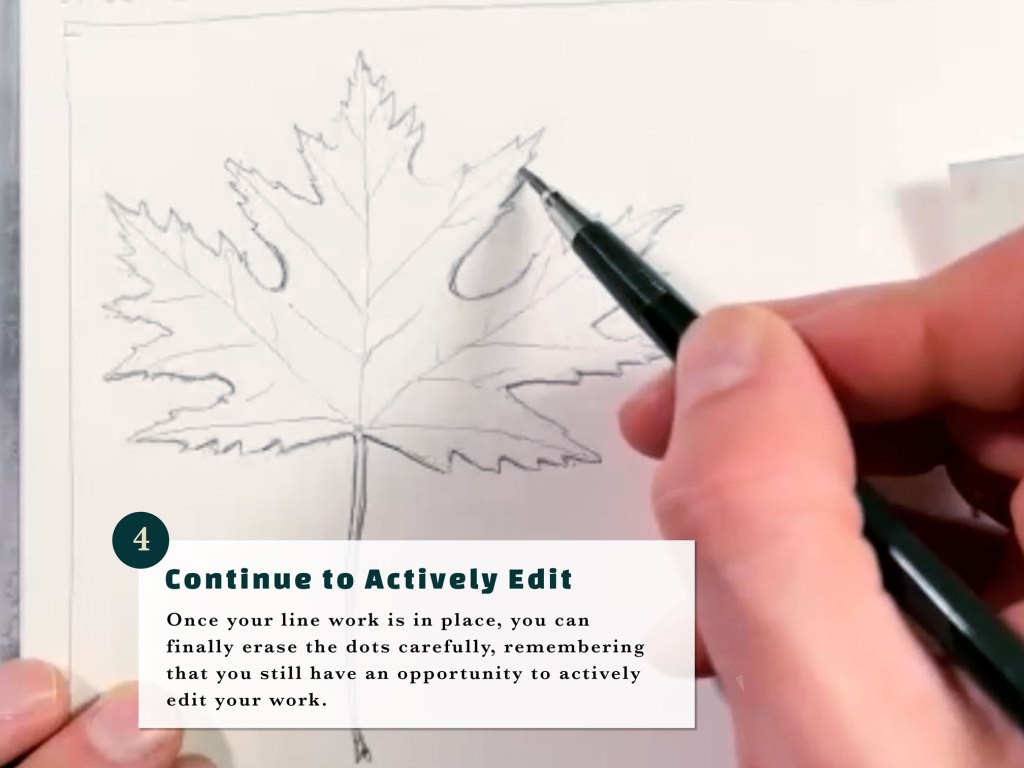
Once your line work is in place, you can finally erase the dots carefully, remembering that you still have an opportunity to actively edit your work until it is exactly what you’d like it to be. This system is going to take practice and patience, but it will not take much time at all to get started. Remember, this “how to draw beginners” intro is for getting started. Try this system a few times using different objects before moving on to more challenging subjects. 

If at any point you begin to feel frustrated, that’s OK. Try a less complicated subject and find some relaxation in the process. 

Your Next Steps for How to Draw

Earlier on, I mentioned that you can use this system to draw anything. Let me drive that point home by inviting you to participate in a FREE drawing workshop. This is the system I teach my students in all of my “how to draw beginner level” classes. With it, we can tackle any drawing task, whether its wildlife, plants, landscapes, pets, and more! 

Digital Drawing Tutorial [FREE Video Tutorial]

This digital drawing tutorial is for artists who want to learn how to convert their physical sketches into beautiful digital drawings. We’ll begin with a pencil sketch and finish a nature themed drawing using a digital drawing tablet. 

https://youtu.be/WTPsg3RH4Uc

Drawing with a tablet can be a touchy subject among artists who would otherwise consider themselves “traditionalists”. This digital drawing tutorial isn’t meant to take you away from using traditional mediums. I want to teach you how to approach a drawing project with an open mind, using pencil and paper first. If you’re already familiar with converting your physical sketches into digital drawings, skip ahead and get started with the free video lesson, below. Otherwise, please read on!

A quick note – some of the links in this article are Amazon Associate links. Using these links will help support Hike And Draw. Thank you for the love 🙂

Digital Drawing Tutorial

Nature is my greatest inspiration. The beginning of my creative process usually involves hiking through the woods, visiting distant seashores, or climbing mountains. I mention this in order to dispel any preconceptions that digital drawing needs only take place in a dark room far removed from anything resembling physical activity or the human experience. Artists need inspiration, correct? Some visit museums, others strap on SCUBA equipment and jump off a perfectly good boat. I’m not here to judge! My point is that digital drawing can be awesome and that you don’t have to abandon your traditional creative process to explore new territory.

Digital Drawing Tutorial Step 1: Find a Topic Worth Exploring

digital drawing tutorial 2
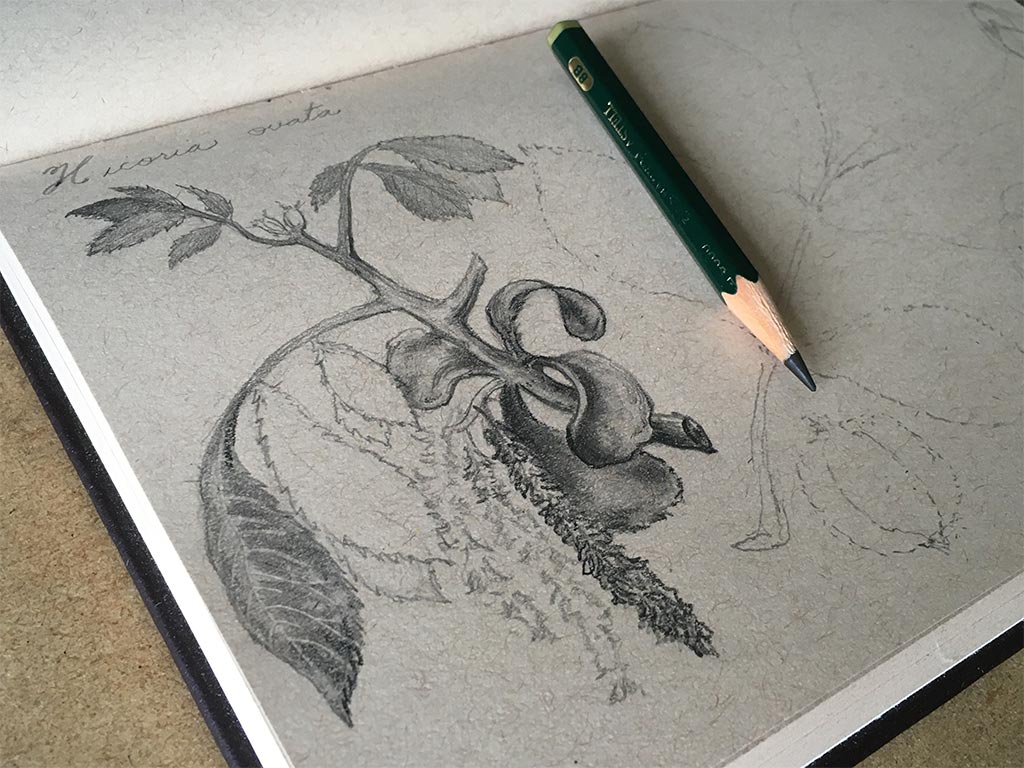
Nature is a great place to look for digital drawing ideas

Digital drawing might be a new frontier for some of you, so it’s important to find something exciting to draw! You already know that I find my inspiration in nature, so let’s look at one of my latest nature journal observations as an example. Keeping a nature journal is one of my favorite hobbies! It’s a fun way to sketch on location and it helps me keep track of ideas, questions and interesting nature drawing prompts while I’m in the field. Digitalize a nature journal entry using a drawing tablet allows you to revisit your experiences in the field while editing out any of the distracting elements. You can learn more about journaling in nature here.

Digital Drawing Tutorial Step 2: Start With Basic Art Supplies

digital drawing tutorial 1
These are a few of the basics drawing tools in my field sketching kit

I like processes that are simple and easy to follow, which is why I initially wasn’t a big fan of drawing digitally. However, after many years of tweaking my process, my drawing tablet has become a friend, rather than an enemy. Drawing with a tablet comes with a bit of a learning curve, which we’ll discuss in a bit, so starting with a medium you’re comfortable with helps make getting started less intimidating. Get your ideas down on paper first, then snap a photo of a physical sketch using a smartphone or digital camera.

To participate in the tutorial, you’ll need the following:

Pro Tip:

“If you don’t have time to stop and sketch in nature, take a quick reference photo to bring home with you.”

If you do have time to sketch, here’s a helpful link for preparing a pencil drawing kit.

Digital Drawing Tutorial Step 3: Uploading Your Sketch to PC/MAC


digital drawing tutorial 3

To convert your sketch into a digital file, all you have to do is import a photo of your sketch to your computer. If you’re not familiar with how that works, check out this helpful article for Mac or for your PC.

I like to keep this step simple by using the camera on my iPhone and Airdropping the photo to my laptop. It goes right to my downloads folder in a matter of seconds – no wires or additional software required!

Digital Drawing Tutorial Step 4: Setting Up Your Digital Canvas

digital drawing tutorial 4
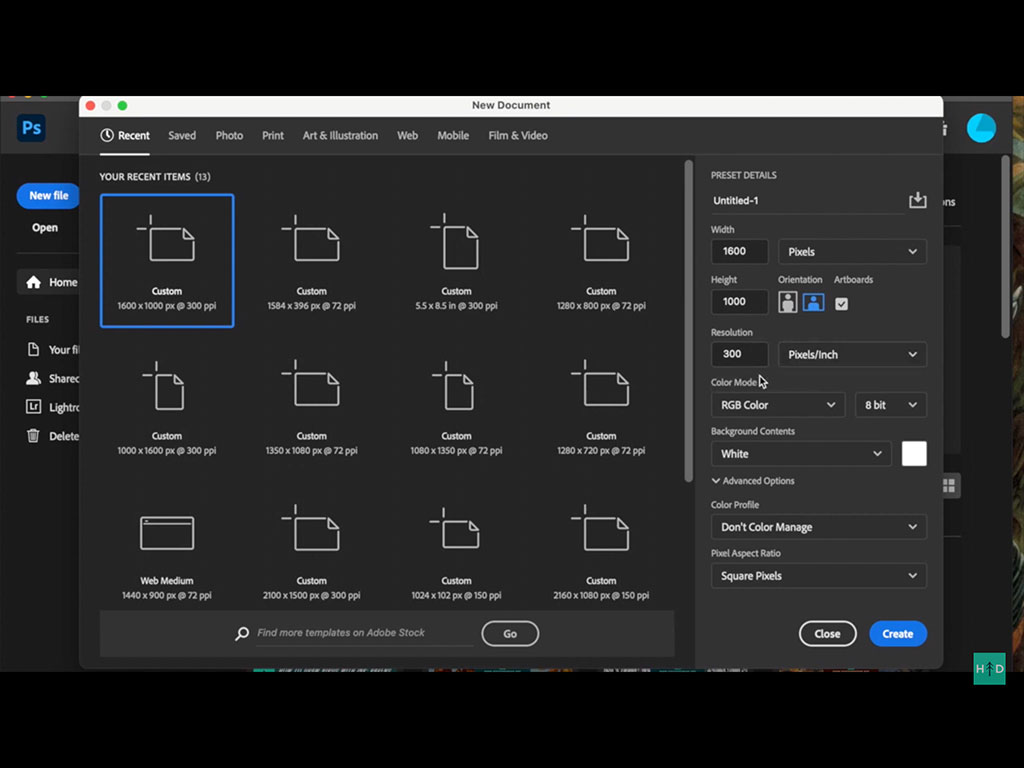
Minimum resolution should be 300 PPI

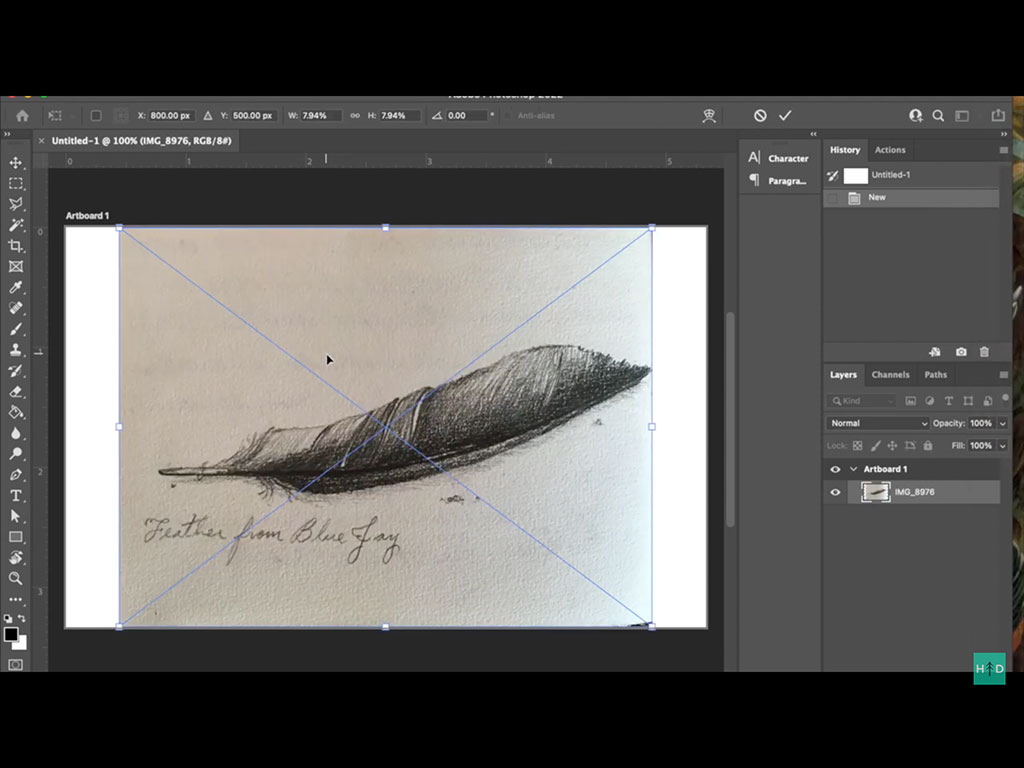
Once the photo file is uploaded, proceed to the next step and import the file to Photoshop. Before I do that, I want to make sure my digital drawing canvas is the right size, which can vary based on the project and resolution, which is always at least 300 PPI. Once this step is completed, we import our photo and SAVE THE FILE, (use the .PSD extension). Be sure to frequently save your progress as you draw!

Digital Drawing Tutorial Step 5: Time to Draw

digital drawing tutorial 6
Your physical sketch will be your base layer

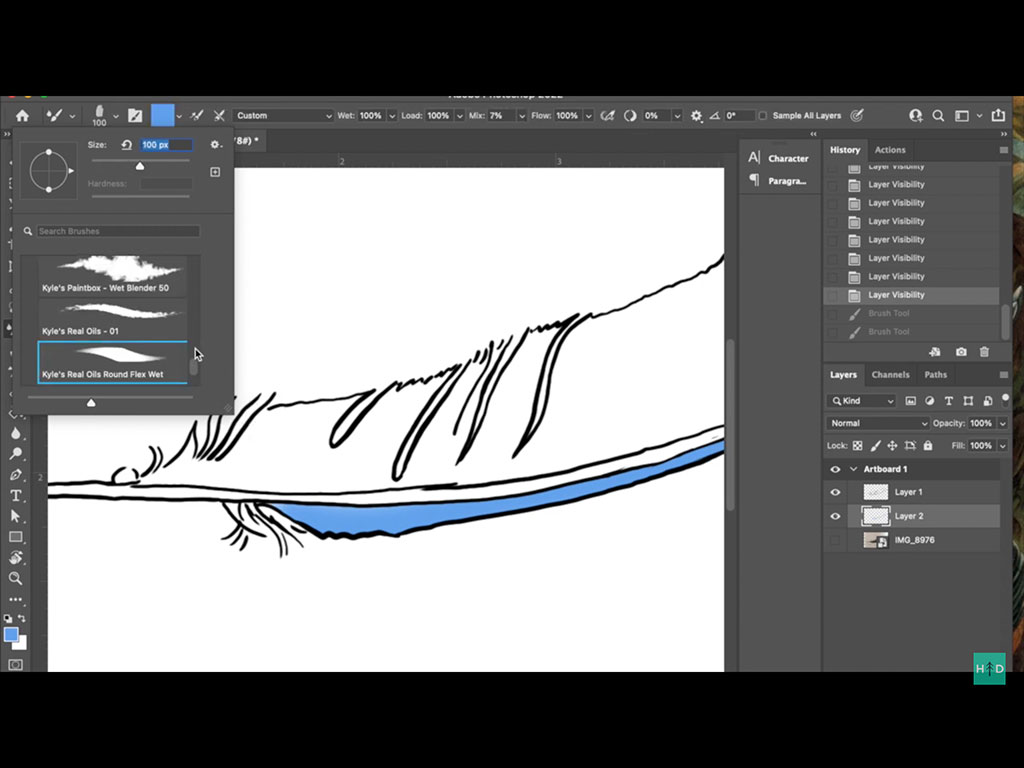
Now that our digital canvas is set up and our photo is imported, we can connect our tablet. If you’re using the same drawing tablet as me, here’s a helpful link that will help you get set up. Once your tablet is connected, create a new layer in Photoshop and select the proper brush. There are a variety of options but we want a brush that is pressure sensitive. That means the thickness of the stroke will be consistent with the pressure we use on our tablet. 

Your physical sketch will be your base layer, which should be 50% opacity. Create a new layer and use your brush to draw over your reference. You can keep adding new layers as you begin to include color. Another advantage is being able to change the hierarchy of layers in your project. Once you’re finished, you can export or print your digital drawing.

Looking for something more robust? Check out the XP-PEN Artist12 11.6 Inch FHD Drawing Monitor!

Digital Drawing Tutorial: Next Steps

I hope you found this article helpful! I want to invite you to try a FREE nature drawing video lesson with me. Simply subscribe in the field below.

Pencil Drawing Kit [FREE NATURE DRAWING LESSON]

Starting a pencil can be overwhelming at first, but having the right tools will help you start on the right foot. This cohesive list of the art supplies will help you build a pencil drawing kit that is ideal for your future projects.

Please note that some of the art supply links in this article are Amazon Associate links. You can help support Hike And Draw by using these links.

pencil drawing kit 1

There’s more to a pencil drawing kit than one would suspect. At minimum you’ll need a decent mid-range pencil to help you get a wide range of light values, a good quality paper that won’t show signs of wear and tear while you’re drawing, and a good eraser that will help keep your work clean without creating pink smudges on the paper.

Pencil Drawing Kit

Remember those yellow No. 2 pencils from school? They might be handy for filling in a multiple choice bubble, but they aren’t the best for drawing. Artist pencils come in a wide variety of thickness, graphite cores, and even colors, each with its own special function. In fact, here’s a handy scale that helps illustrate that point. A good pencil drawing kit is more than just finding the right pencil for your work, however. In this article, we’ll dive into the different elements that make a pencil drawing kit versatile and effective.

The Hero of Your Pencil Drawing Kit

pencil drawing kit 2
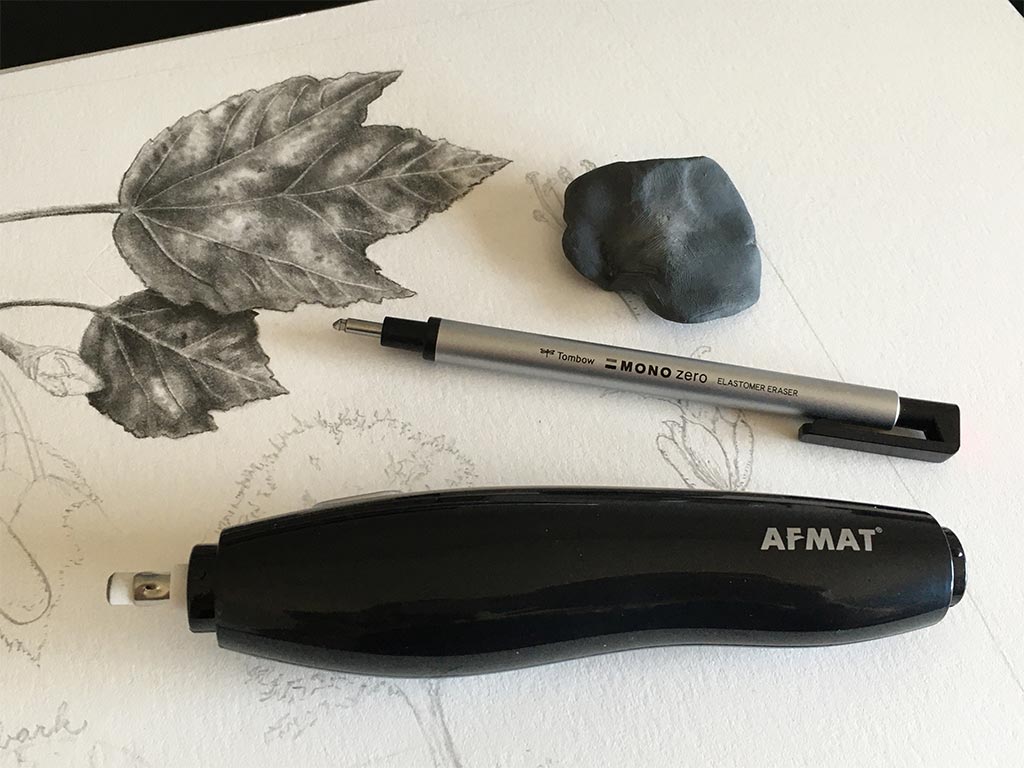
Don’t laugh! The electric eraser will remove the toughest marks if used correctly.

Everyone knows that the hero’s job is to save the day. The same can be said about the indispensable eraser. Erasers obviously come in all shapes and sizes, but what material is best? 

The Kneadable Eraser

  • The best kind of eraser for drawing with pencil. Not only can you mold it into a variety of shapes to suit your needs, they can be used for years
  • The only downside is that you need to protect them from lint and dust, so keep your kneadable eraser in a plastic container when it’s not in use
  • I recommend the Faber-Castell Large Kneaded Eraser

Pro Tip:

“You can use a kneadable eraser to add incredible textures to your work, soften hard edges, and create smooth gradients.”

The Micro Eraser

  • Great for precision removal in small areas that the kneadable eraser can’t pinpoint neatly
  • Handy for adding fine details like highlights and textures
  • I recommend the very portable Tombow Mono Zero Eraser

The Electric Eraser

  • An important tool for removing dark graphite form the page after pressing too hard. This brings you back from the dreaded “point of no return”
  • I recommend the rechargeable AFMAT Electric Eraser

Premium Pencil Drawing Paper

pencil drawing kit 3
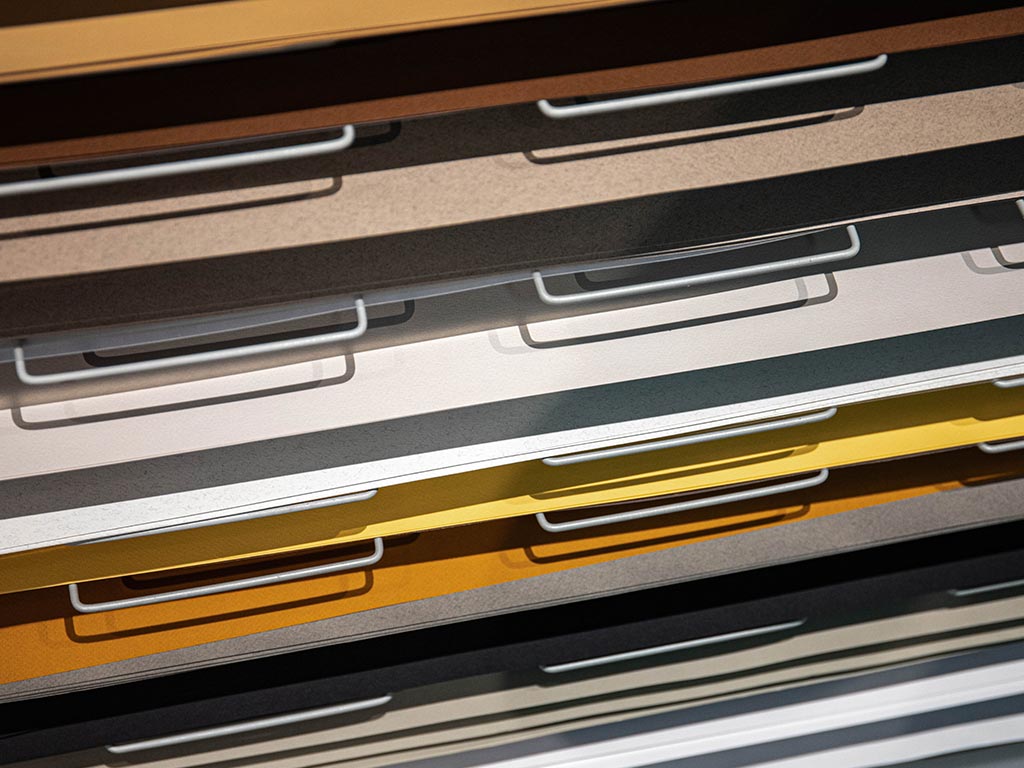
Never underestimate how much your work will be effected by the quality of the paper

When it comes to drawing with pencil, never be underestimate how much your work will be effected by the quality of the paper. Newsprint is the cheapest quality paper on the market, which is why it’s sold in massive quantities to art students for the purpose of rapid charcoal studies. Printer paper is slightly better and ranges in quality, but has more limitations than benefits. If you’re not making detailed drawings in the great outdoors, here are a few suggestions for much better home studio options.

Hot Press Watercolor Paper

Illustration Board

  • Traditionally used by professionals for multimedia projects, illustration board is a tough, durable surface to work on
  • The coating on illustration board makes erasing less ideal, but it allows you to add layers of paint over your pencil work if you prep the board correctly
  • I recommend Crescent Hot Press Illustration Board

Bristol

The Almighty Drawing Pencil

pencil drawing kit 4
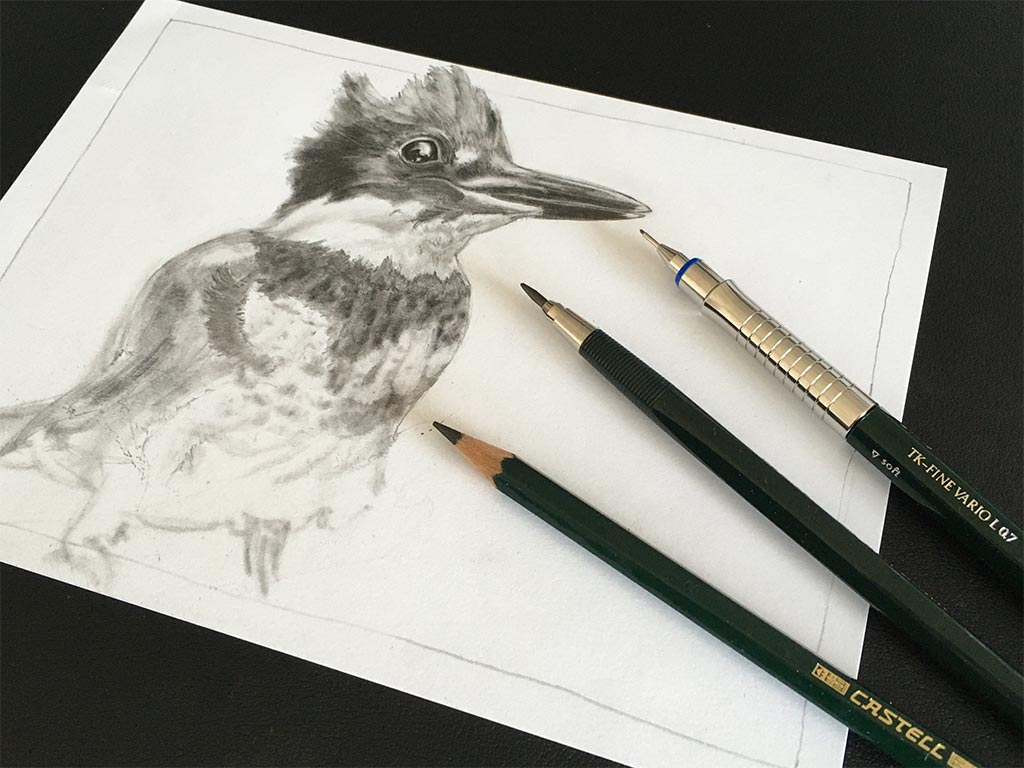
A combination of a mechancial and regular pencil is necessary to create feather textures

A good drawing pencil is the foundation of your drawing and field sketching kit. Depending on your objective, you may require only one kind or many. Here are some recommendations based on the pencils I use in my professional work.

2B Pencil

8B Pencil

  • Soft, workable graphite creates bold, dark values. Great for adding dynamic range to drawings with high contrast
  • Smudges very easily. Protect your work by using a piece of scrap paper to rest your hand on 
  • I recommend Faber-Castell 8B Pencils

9B Graphite Powder

Blending Tools for Pencil Drawing

pencil drawing kit 5
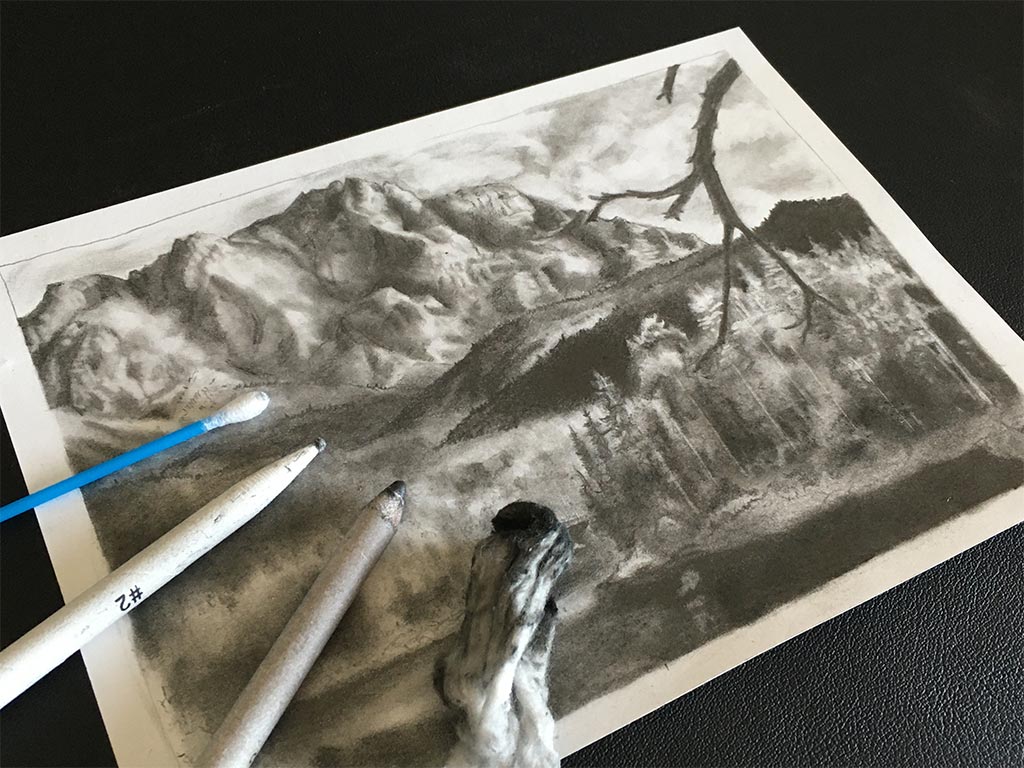
You can sculpt realistic forms in graphite with blending tools

I arrived lated to the game where blending tools are concerned. Now they are a crucial element of my kit that help me take my pencil drawings to a higher level.

Blending Stumps

  • Blends graphite to create smooth transitions between textures and value ranges
  • Can be used as a delicate pencil when saturated with graphite
  • I recommend Norocme Blending Stumps

Brushes

Next Steps for Building Your Pencil Drawing Kit

I hope you found this article helpful! Your next step is to experiment. Subscribe and you’ll get access to one of my pencil drawing tutorials for FREE.

Nature Journaling Prompts [FREE DOWNLOADABLE PROMPTS LIST]

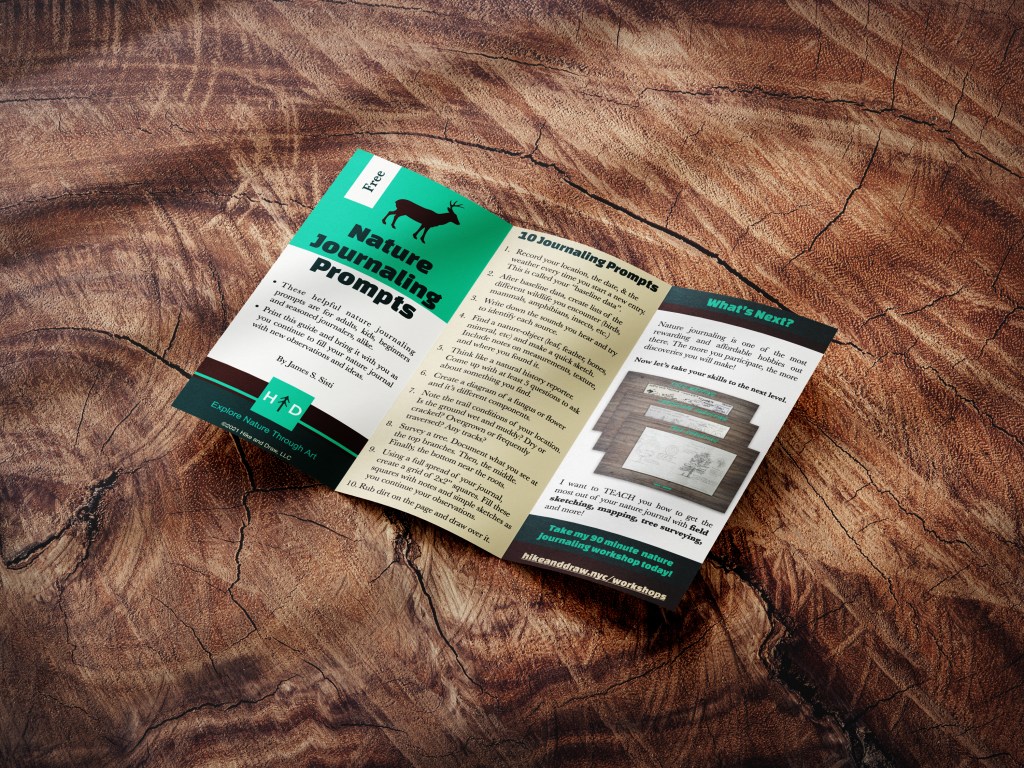
Helpful nature journaling prompts for adults, kids, beginners and seasoned journalers. FREE PROMPTS LIST DOWNLOAD to help fill your nature journal with fresh ideas.

nature journaling prompts 1

Despite the abundance of articles that focus on how to start a nature journal, there aren’t many that focus on how to COMPLETE one. These helpful nature journaling prompts will keep you actively engaged in pursuing a deeper relationship with nature while building knowledge through personal experiences.

Nature Journaling Prompts

Completing a nature journal used to be a tough challenge for me. There were always excuses like “writer’s block” or “not having enough time” to keep me from filling a book cover-to-cover. I’m happy to say this is not the case today. The first lesson that pointed me in the right direction is that nature journaling is not as restrictive as I had once mistakenly believed. It takes on many forms, from bullet lists and data points to hand-drawn maps and thumbnail sketches.

You don’t need to be an artist. You don’t need to be a biologist. All you have to be is curious about nature! With that in mind, I’ve created these helpful nature journaling prompts for you to try on your next outing.

Nature Journaling Prompt: Record Baseline Data

nature journaling prompts 2
What do these entries have in common? Baseline data!

Assuming you’ve already settled on your preferred nature journaling kit the easiest prompt you can start with are these three key pieces of info.

  1. Your location
  2. The date, which provides a timestamp for your entry
  3. Environmental conditions in your location, such as the weather, temperature, and wind

Collectively, these pieces of information are known as “baseline data” and they provide a context for everything else that you record in your journal that day. In fact, recording baseline data with your observations is a great way to combine nature journaling with citizen science!

Even if your journal only consists of baseline data entries, over the course of a year you will have constructed a valuable database of weather events in your location of choice. Pretty cool, right?

Pro Tip:

“Observe the changes that occur in your local environment during a weather-shift. For example, what bird species are actively hunting worms when it rains?”

You should always know before you go! Get detailed weather information in your area. 

Nature Journaling Prompt: When You Can’t Draw, Make A List!

nature journaling prompts 3
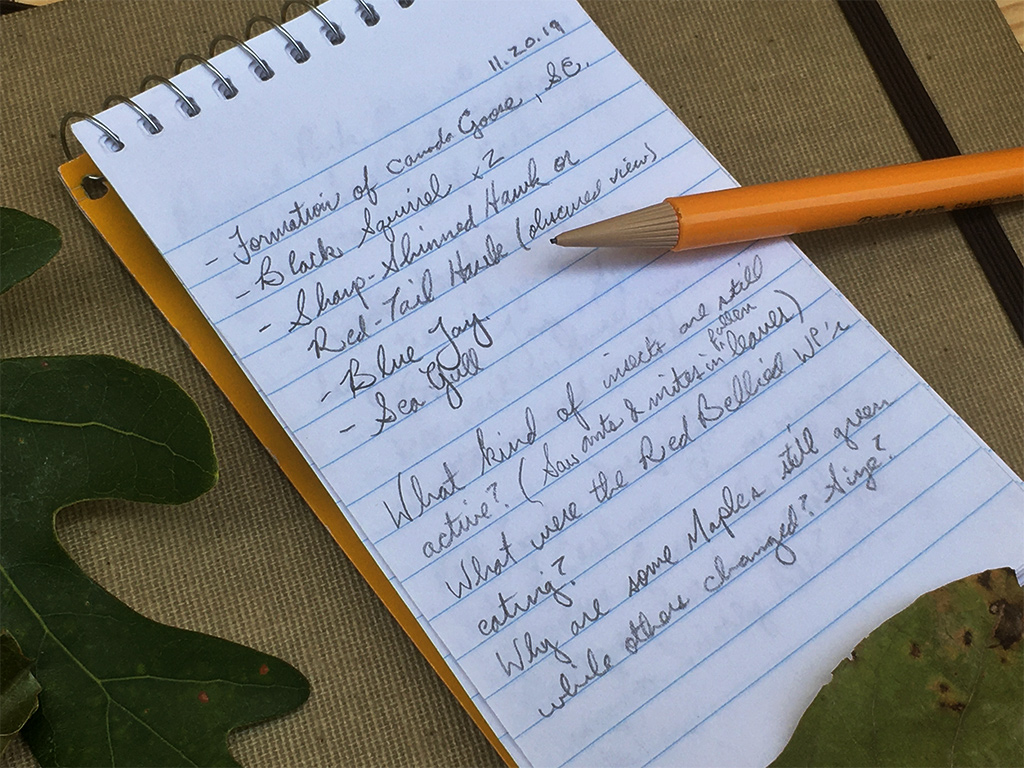
When I’m on a fast-paced hike, I love making lists of the wildlife I see along the way.

Whenever I’m not in a position to stop and draw to my heart’s content, I supplement my entries with lists of observations. This is a great way to catalogue things on the go, such as bird and wildlife sightings, which plants are blossoming or bearing fruit for the first time in a given season, what foliage is changing color first, etc.

When these lists are paired with the baseline data mentioned above, you’re adding another layer of REAL SCIENTIFIC DATA to your journal. Imagine being able to learn not only WHAT wildlife or plant species you can encounter in your location, but also WHEN and WHERE.

Nature Journaling Prompt: Use Nature Drawing As A Learning Tool

nature journaling prompts 4
Drawing helps me to slow down and LEARN something new!

The whole point of nature drawing isn’t to make pretty pictures all the time. It’s a tool that helps you focus on a particular subject in the field long enough to LEARN something new about it. Even if you can’t finish a sketch, your baseline data provides enough context for it to make sense and become an interesting visual.

If you want to truly study a subject in the field, focus on the subject itself by documenting your observations with notes, rapid gesture sketches, and even icons to show how a subject interacts with its environment. In this case, the quality of the data surmounts the quality of the drawing.

However, if you want to create a fully rendered drawing of a subject, focus on getting a good reference photo so you can take all the time you need to finish after you get home.

Nature Journaling Prompt: Think Like A Natural History Reporter

nature journaling prompts 5
Writing down questions is just as important as writing down facts.

Filling your nature journal with questions is equally as important as filling it with observations. Thinking like a natural history reporter opens your mind to possibilities that would otherwise remain undiscovered.

Consider the “who, what, when, where, why, and how” questions that could make a seemingly ordinary subject suddenly more interesting. For example, I see more pigeons in New York City than I know what to do with (technically, rock doves). One day it dawned on me that every single pigeon does a little head bob when it walks. The simple question “why?” lead me down a rabbit hole of research that resulted in a full-spread entry in my nature journal. Did you know they can fly up to 93 mph? Hawks are faster.

Nature Journaling Prompt: Embed Yourself in a Nature Location

nature journaling prompts 6
You can learn a lot from reading a landscape. DRAWING a landscape can teach you even more!

Embedding yourself in a nature location means creating a consistent dialogue about everything that interests you about a given environment. This doesn’t necessarily mean heading to the woods every weekend or hiking every day (although that sounds nice).

During the COVID lockdown, I kept a nature journal that focused primarily on the plants and birds in my backyard. Using these nature journaling prompts, not only did I LEARN more from that patch of land than I would have ever expected, I actually COMPLETED that nature journal in a matter of months!

Remember, the best way to build knowledge is through personal experiences, and it doesn’t get more personal than an archive of nature journals that YOU filled with REAL data from your observations.

Next Steps for Filling Your Nature Journal

I hope you found this article helpful! I’ve added even more nature journaling prompts to this FREE downloadable list. Subscribe and you’ll get 10 nature journaling prompts to try.

Best Field Sketching Kit for Beginners [FREE NATURE DRAWING LESSON]

“Field sketching” means drawing subjects from nature on location. Not only is this great drawing practice, it’s also a creative way to tune into your environment. This article will teach you how to create the best field sketching kit for your needs. What you’ll learn:
  • How to build a field sketching kit 
  • How to modularize your kit
  • How to optimize your kit
What you need:
  • Hard cover sketchbook or notebook
  • Basic drawing materials
  • Portable container

Step 1: Start With a Basic Field Sketching Kit

It doesn’t require much to get started with field sketching. In fact, you can build your very own field sketching kit for under $10. The best way to proceed is to start with the basics: a sketchbook and a pencil.  Overall, I find that a sturdy, portable, hardcover book with multi-media paper is a good general starting point for most people. If you’re particular, try something that works for your preferred medium. For example, a journal that’s best for pencil drawing might not be ideal for watercolor paintings. Best Field Sketching Kit for Beginners 1

Step 2: Only Bring What You Are Definitely Going Use in Your Field Sketching Kit

It’s easy to get overly ambitious and bring an entire set of paints, brushes, inks and the kitchen sink. However, the best way to show up prepared is to know what you will do before heading out. Your kit will always contain the basics but you can modularize your kit by adding only what you know you will use on location.  There was a period in my field sketching when I wanted to copy the style of the old masters by using sepia ink. I learned the hard way that although this medium worked great at home, it was HORRIBLE out in the field because the ink would bleed if it got wet. Modularizing your kit is an ongoing trial and error process. Don’t be afraid to experiment. You can always fall back on your basic kit if it doesn’t work out. Basic Kit:
  • Hardcover Sketchbook or Nature Journal
  • Pencil with sharpener
  • Kneaded Eraser
Optional Add-ons:
  • Color Pencils
  • Watercolor Paints or Inks
  • Measuring or other scientific tools
Best Field Sketching Kit for Beginners 4

Step 3: Optimize Your Field Sketching Kit for Your Environment

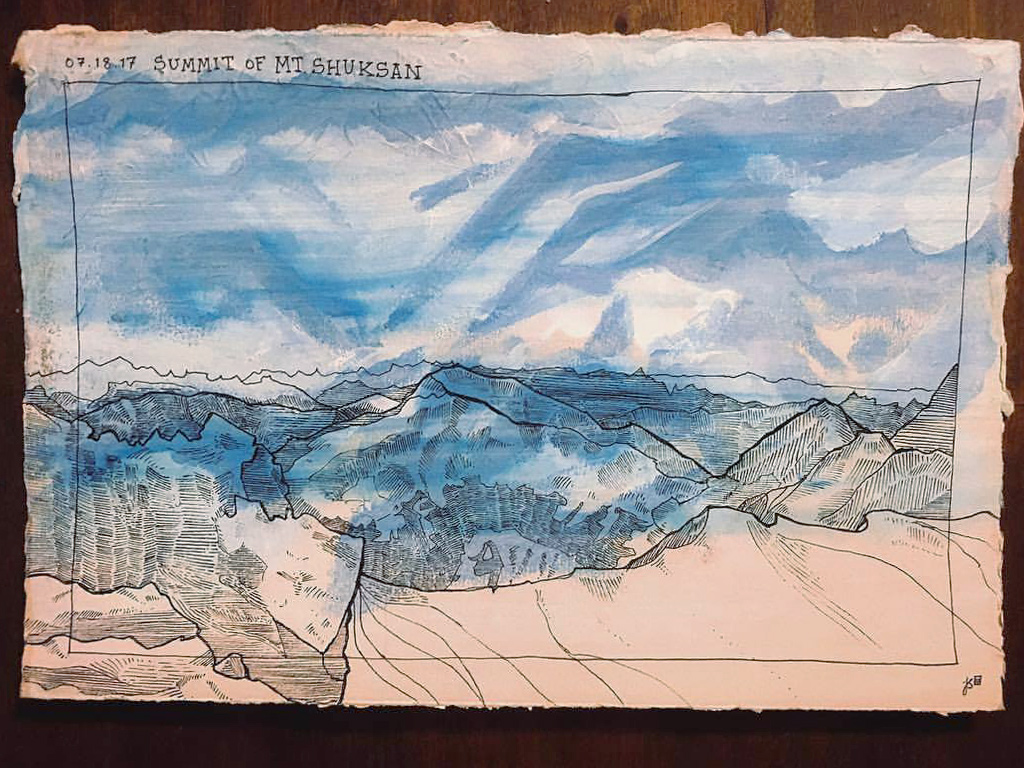
It’s important to understand the conditions you might encounter in the field. Several years ago, I thought it would be a great idea to make an acrylic painting from the top of Mt. Shuksan. After reaching the 9,131 ft summit, my paint froze and my brush got ruined. Worst of all, I couldn’t finish my field sketch! Planning is everything when venturing out into nature, especially if you want to optimize your field sketching kit. If I were to attempt another mountaintop field sketch, I would certainly include a medium that wouldn’t freeze, as well as glove liners that allowed my hands to stay warm while maintaining dexterity.  What I Brought:
  • Individual sheets of watercolor paper
  • Acrylic Paint and Brushes
  • Ink brush
  • Felt tip pen
  • Whiteout pen
What I Should Have Brought:
  • Hardcover Sketchbook
  • Pencil (HB & 2B) & Sharpener
  • Kneaded Eraser
  • Color Pencils (Primary Colors) or Color Tinted Charcoal Pencils
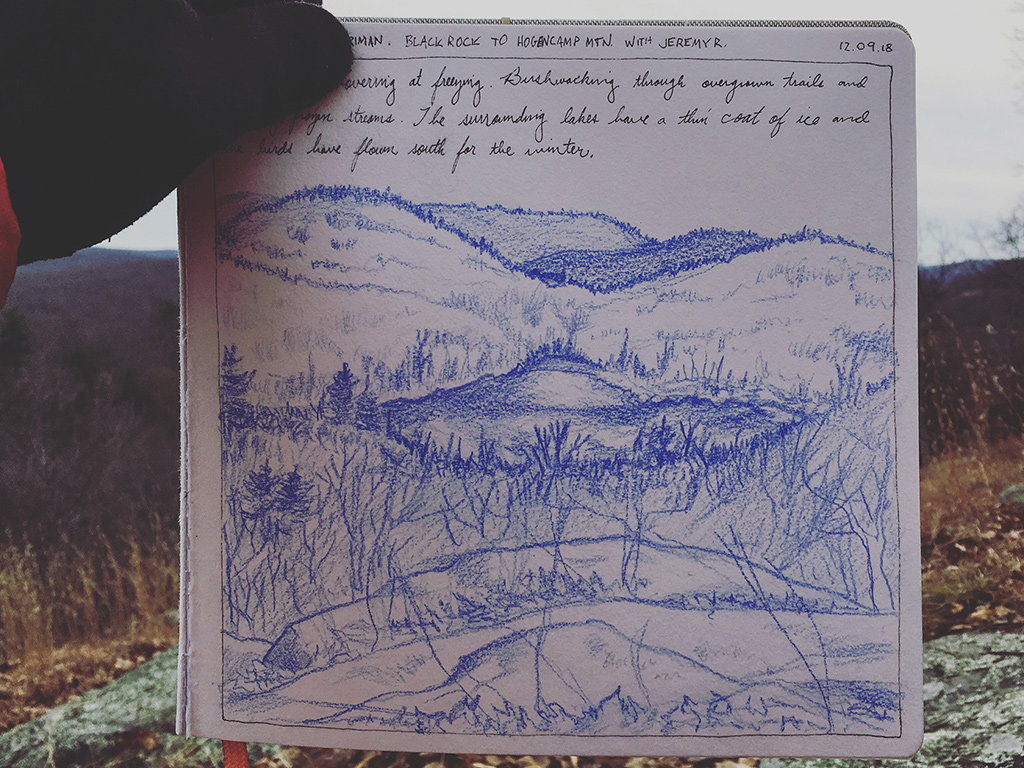
Best Field Sketching Kit for Beginners 5 You can tell that this painting just didn’t work out. I took a reference photo and finished the field sketch in ink after I got home. What a missed field sketching opportunity! Best Field Sketching Kit for Beginners 6 I actually got to finish this field sketch on location. All I did was optimize my kit for freezing temperatures. The glove liners and hot tea thermos also came in handy.
How to Build Your Field Sketching Kit Video​

Now that we’ve covered the basics, let’s recap and explore a few other points.

Recommended Basic Field Sketching Ket Materials

Enjoy the article? Try my FREE Nature Drawing Lesson!

Hike And Draw Free Workshop

Journaling in Nature [FREE NATURE DRAWING LESSON]

Helpful tips for journaling in nature. Learn how to add more intention and focus to your favorite outdoor hobby. Give your journal a creative twist by taking my NATURE DRAWING VIDEO LESSON ABSOLUTELY FREE.

journaling in nature 1

Journaling in nature has become one of my favorite ways to connect more deeply with my environment. Although there are many benefits, the main point I want you to consider is that journaling in nature will help you discover things that you would never notice otherwise

You’d be surprised how many amazing nature moments are completely missed by the average hiker. Despite being surrounded by an abundance of wildlife, complex ecosystems, and epic scenery, we still have a bad habit of getting distracted on the trail. Let’s face it, between phones, confusing maps, and overly chatty trail companions, the list of distractions can easily spiral out of control. Why would anyone want to hike like this??

Journaling in Nature

journaling in nature feature

Nothing bothers me more than spending a lot of money to realize I’m not having fun, which is why I’ve always enjoyed trying new hobbies that are low risk and high reward. The good news about journaling in nature is that it’s probably the most affordable hobby to test out. All you need to get started is a pencil and a notebook, which is pretty low risk (we’ll cover additional materials in more detail later). 

In order to get that high reward, I want you to approach this activity like an observation exercise. Journaling in nature improves your on-trail awareness because it forces you to slow down and consider what’s around you from the top-down. You can begin to imagine the kind of discoveries you’ll make after adopting this mindset!

Take A Nature Journal For A Test Drive

journaling in nature 2

I could write a whole post on choosing the right kind of nature journal, so for now, a simple notebook will do. Consider this your “test drive journal“. There is no such thing as mistakes here! The whole point of this step is to figure out if nature journaling is for you. The bonus is that you get to sharpen your observational skills and document what you find interesting on your hike. There’s that low risk, high reward ratio that I love!

Your nature journal is a place to record not only observations from external sources, but questions and thoughts that are framed internally, as well. Filling your journal with questions is equally as important as writing down facts. That’s how you know what to look for moving forward.

If you’ve already chosen your ideal format, I recommend that you download this handy list of nature journaling prompts.

https://youtu.be/7ZAUkBuToik

Sketching in Your Nature Journal is a Bravery Test

journaling in nature 3

Let’s get this out of the way – you don’t need to be an artist to benefit from this practice. Believe it or not, teaching sketching to adults is harder than teaching the exact same thing to children. The main reason is because kids aren’t afraid to draw. The legendary Bob Ross used to call moments of artistic apprehension “bravery tests”

Luckily, nature journaling isn’t about making pretty pictures. The point of this exercise is to slow down and focus on something long enough for you to notice something interesting about it. The drawing doesn’t even have to look good for this to be effective! It’s a trick you can play on your brain to tune out all the distractions and focus on making discoveries.

Never Underestimate the Value of a Good Nature Journaling List​

journaling in nature 4
Nature journaling with a bullet list

In addition to field sketching, using lists and bullet points in your nature journal is THE best way to break it in. Over the course of a few years, a collection of lists can not only tell you what kinds of wildlife to expect in a given location, but also WHEN. It’s also the best way to document your questions and observations on-the-go. Not everyone has patient trail companions!

I also recommend writing down the trail conditions. This is great supplemental information to any hiking maps you purchase. Over the course of a year, you’ll be able to pin-point optimal trail conditions in every season.

Nature Journaling With Real Specimens​

journaling in nature 5
Having a sense of humor helps

Before you start bringing home the whole forest, it’s important to recognize that some things should always stay in the woods, especially anything that’s endangered or threatened. Stay up-to-date with your local laws and even see how to apply for collection permits from the USDA Forest Service. The best way to play it safe is that if you are not sure, just leave what you found where you found it. This helps protect your local environment and prevents the spread of pests and other invasive species. You can always snap a quick reference photo!

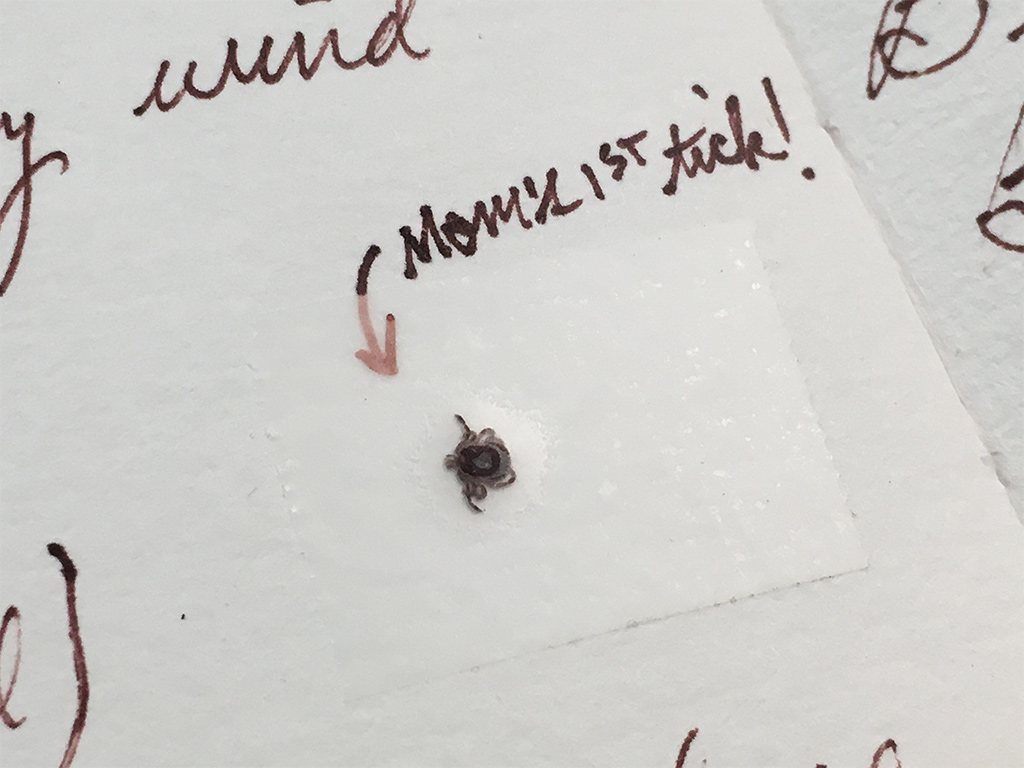
That being said, feathers, leaves, and even certain insects can make excellent educational specimens for your nature journal. I keep a little roll of tape in my kit for just such occasions. This is especially helpful for when I want to create a diagram using a physical specimen rather than a drawing. It’s also a cool way to demonstrate the differences between a variety of species of the same genus.

Experiment With Natural Mediums While​ Journaling in Nature

journaling in nature 6
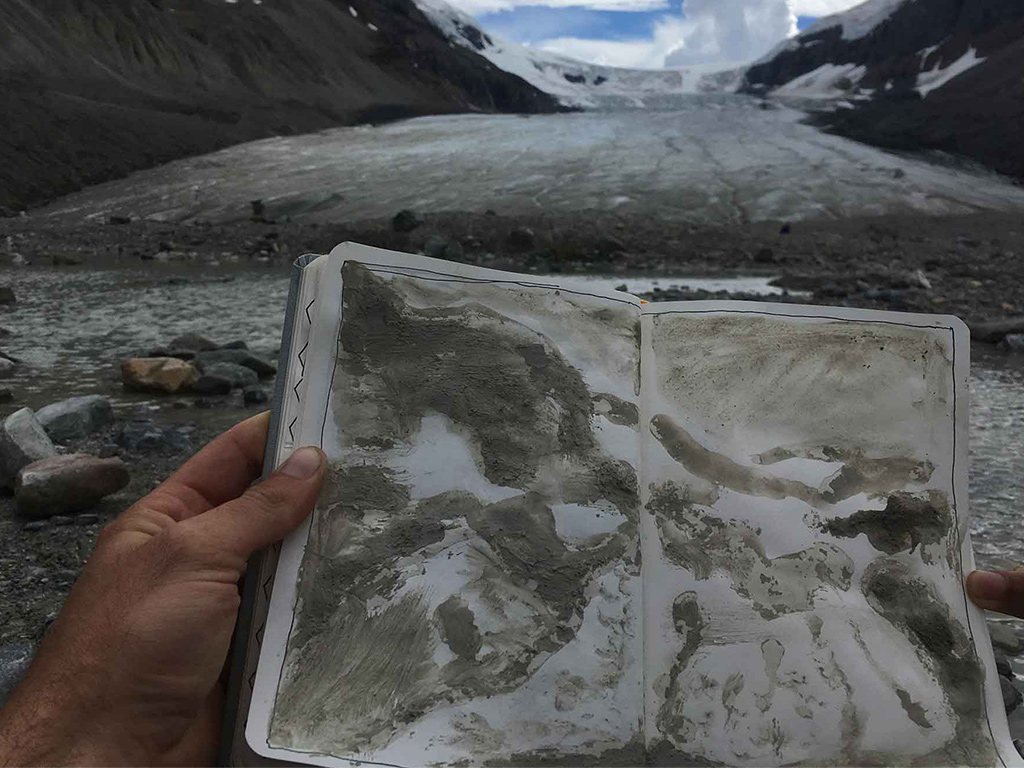
Athabasca Glacier Icefield in Alberta, Canada

It’s tempting to schlep a bunch of different supplies with you on the trail, but I recommend sticking with a limited kit that consists of basic drawing supplies. You want easy-to-use tools that require almost zero cleanup, such as color pencils or felt tip pens. I wrote more about this in my kit building article

For years I’ve enjoyed using natural mediums found on the trail. Some of these include blackberry juice, flower pigments, cave dirt and even clay from glacial fields! Not only does this add a bit of visual variety to your field sketches, you actually get to create visual memories using the actual landscape! Your nature-connection doesn’t get much more personal than that.

Every Nature Journal Needs a Point of Interest

journaling in nature 7
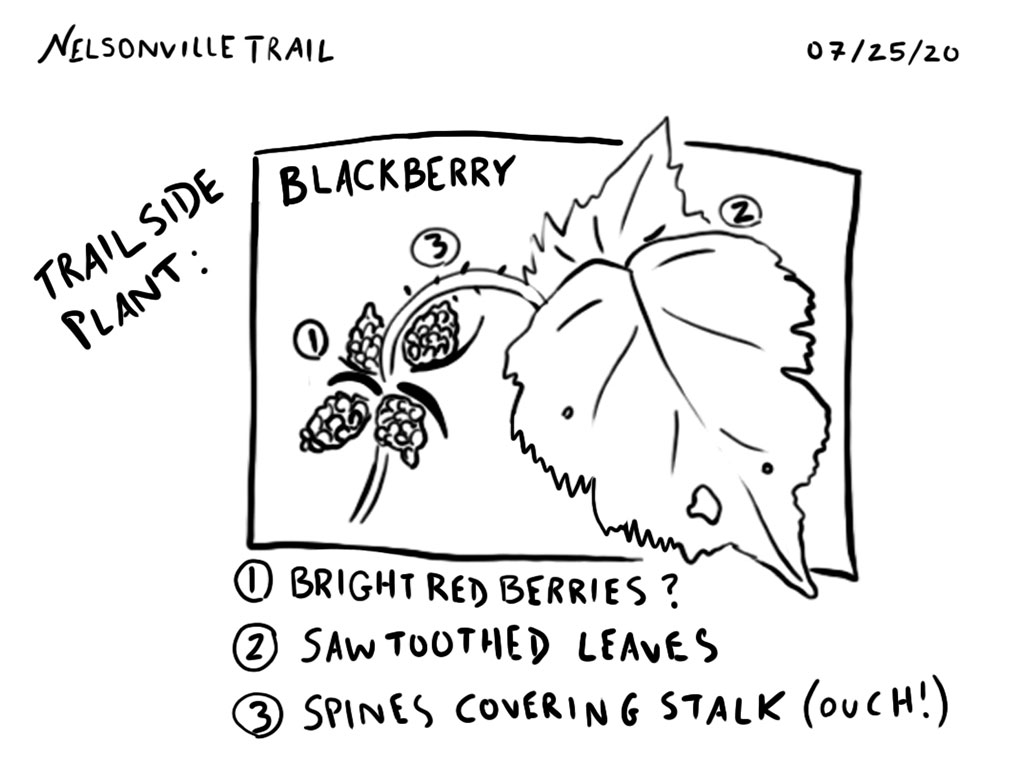
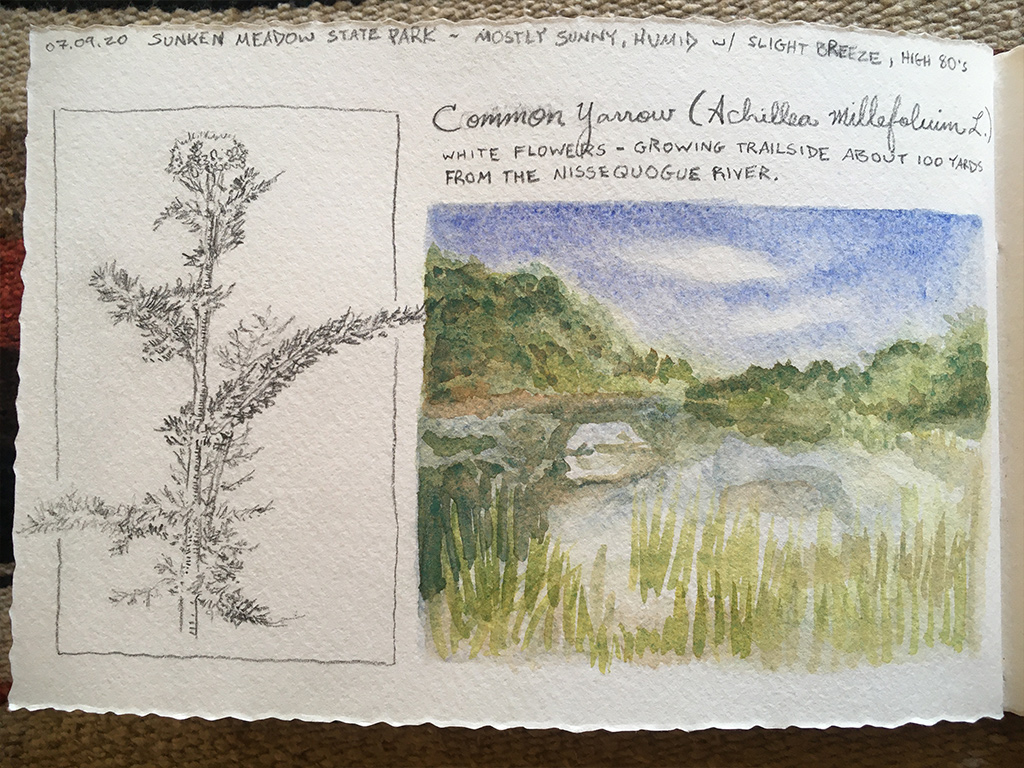
My nature journal entry from July 2020

Last summer, my goal was to become more familiar with the local plants I encountered while guiding hikes. I found a very insightful mentor who set me up with different “homework” assignments that I would complete on trail. My nature journal was an integral part of my studies and I am a more knowledgeable wilderness guide as a result!

My point is that if you choose a nature subject that truly captures your curiosity, your nature journal will quickly become your favorite trail companion. I’ve encountered wonderful nature journals from hikers, birders, climbers and fishermen. Now that I’ve told you all you need to begin journaling in nature, it’s time for you to pick your favorite subject and dive in!

Your Next Steps for Journaling in Nature

I hope you’re excited to start journaling in nature! I wrote about sketching and now I’d love to TEACH you how to use art as a way to explore with your nature journal. Subscribe to my mailing list and you’ll get a nature drawing lesson FOR FREE. I send helpful tips, how-to videos, and other useful resources every week.

How to Draw a Butterfly [FREE TUTORIAL]

One of the most popular how-to-draw subjects is “how to draw a butterfly”. In this tutorial, I will teach how to draw a butterfly using my very practical and easy-to-learn drawing system.

What you’ll learn:

  • Learn how to draw a butterfly
  • How to plan a drawing using dots
  • Line drawing techniques

What you need:

  • Pencil – 2B softness works best
  • Blank paper – Doesn’t need to be fancy


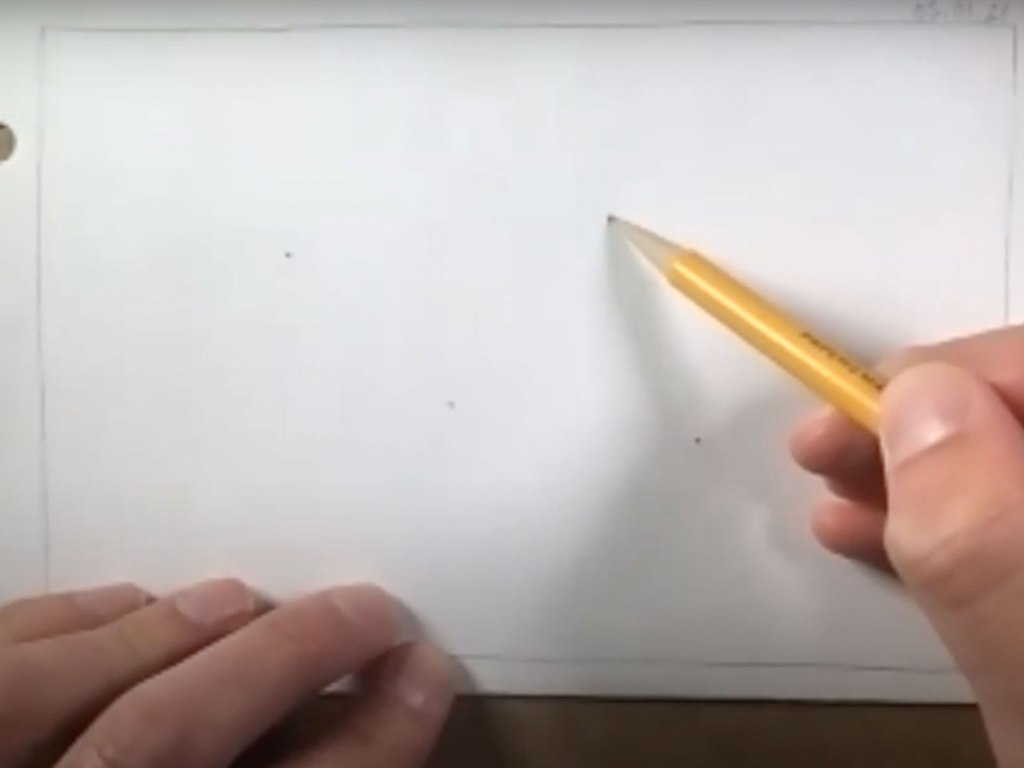
Step 1: Plan your drawing like an architect

Planning a drawing the right way will put you in an good starting position. By establishing the height and width of your butterfly first, (using dots, of course), you will have an easier time drawing your butterfly.

how to draw a butterfly - step 1

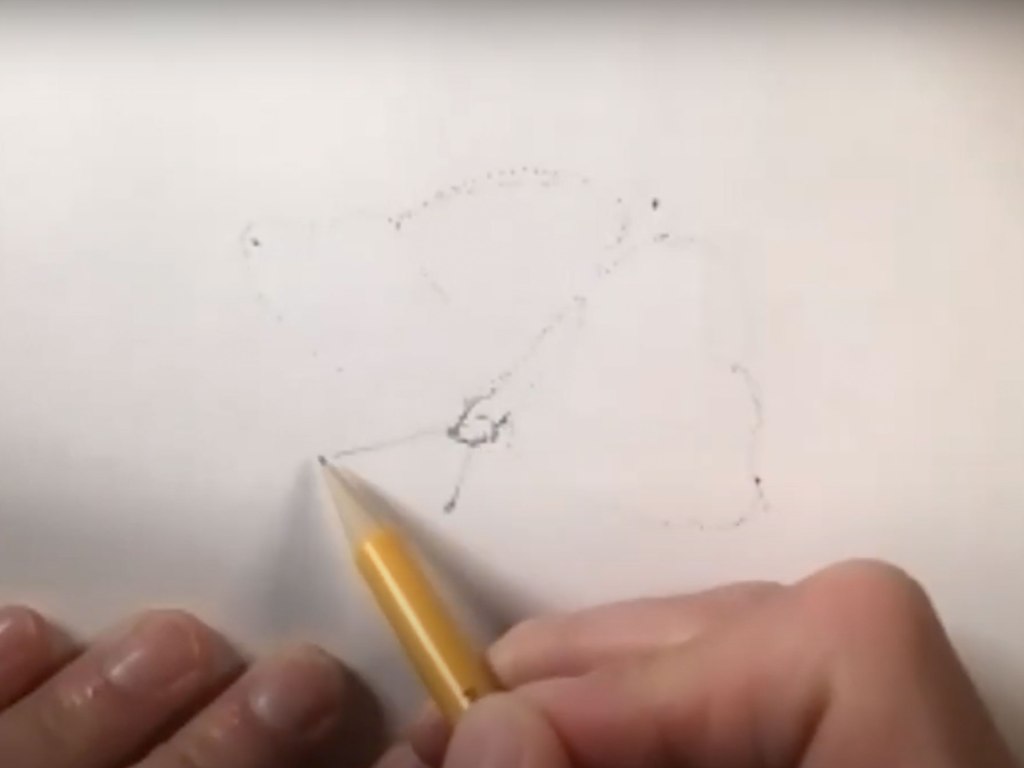
Step 2: Create Your Blueprint

Next, consider the outline of the butterfly. Use dots to create a foundation or blueprint to help guide you on your next step in drawing a butterfly.

how to draw a butterfly - step 2

Step 3: Build on top of your foundation

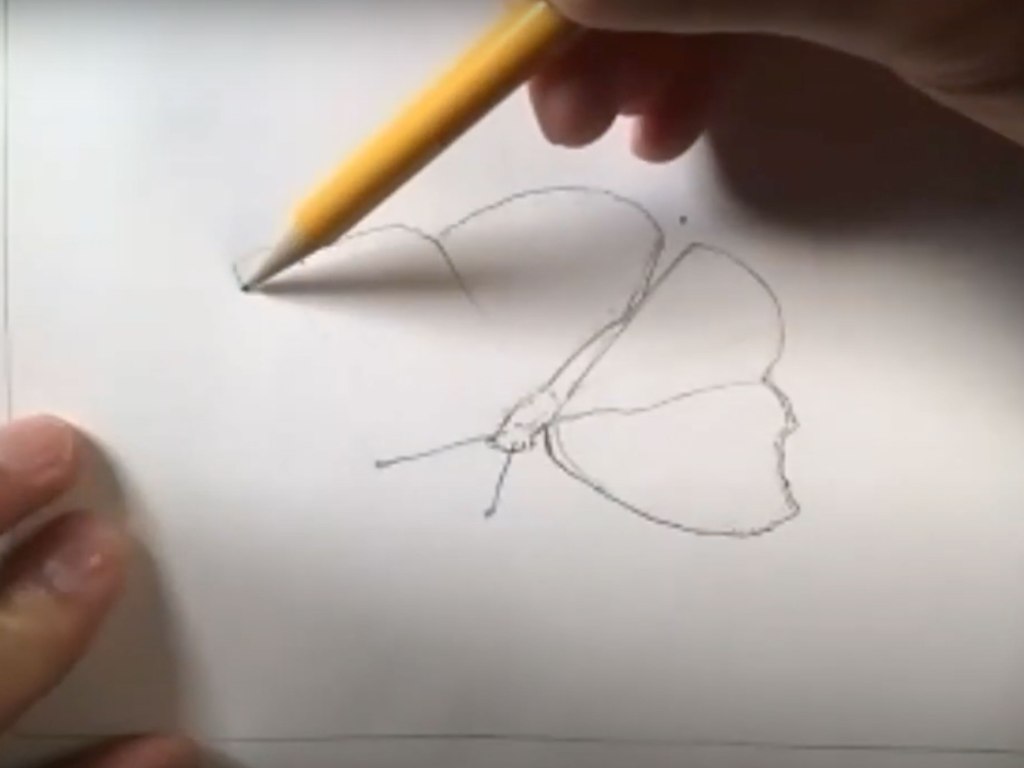
Now that the planning stage is complete, it’s time to draw a butterfly! You don’t have to trace the dots you created in our blueprint verbatim. Use this as an opportunity to actively edit your drawing, instead. Now you can draw more accurate lines now that the foundation is there to guide you. After that, use your eraser to clean up all the extra marks you don’t need.

how to draw a butterfly - step 3

Step 4: Include the finer details

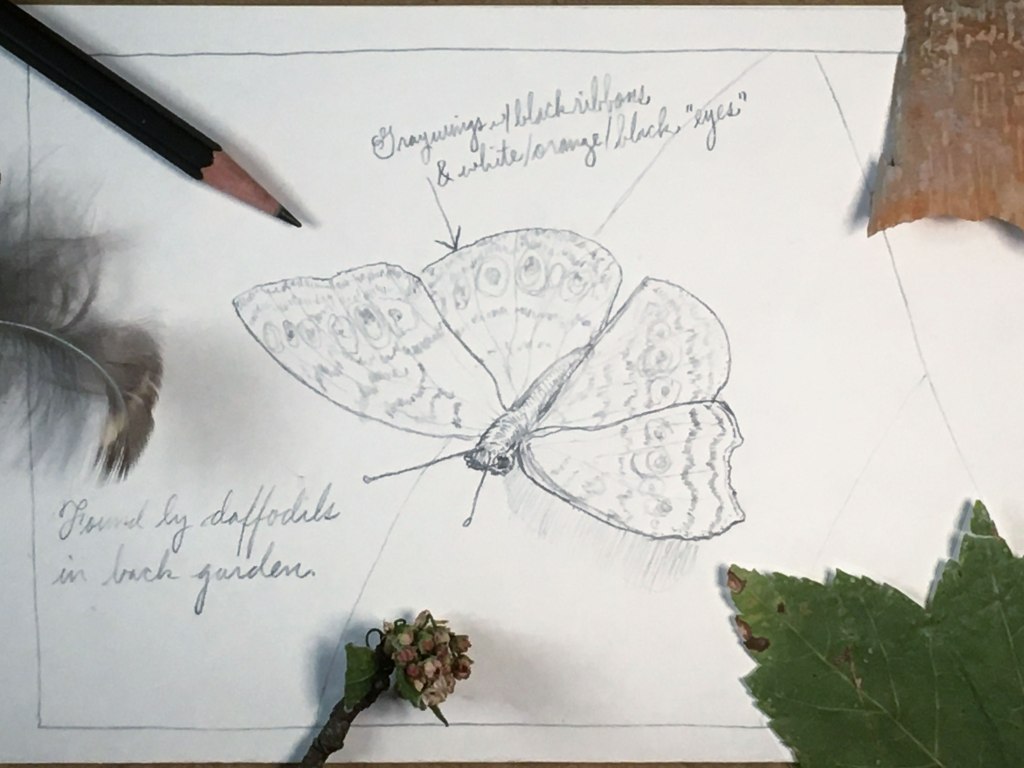
Once you’re happy with the way your line drawing came out, begin adding texture by using smaller marks in a consistent pattern. This is very free-form, so just have fun with it!

how to draw a butterfly - step 4

Step 5: Add observational notes (optional)

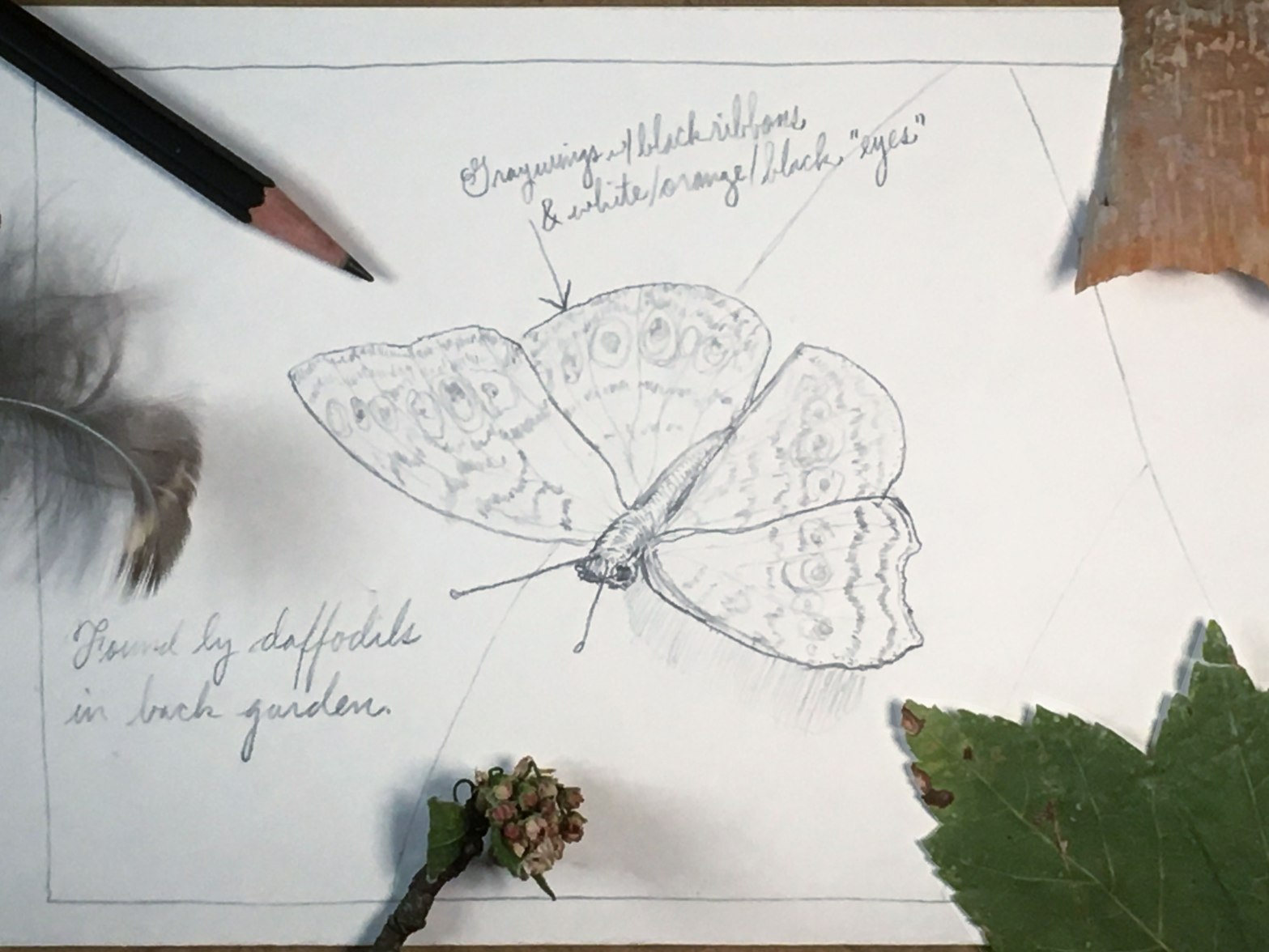
This step is explained more in my Nature Journaling workshop. The goal is to add more informational value to your drawing by injecting real scientific data based on your direct observations. This includes date, location, measurements, etc.

how to draw a butterfly - step 5

How to Draw a Butterfly Video Tutorial

It’s time to draw along with this video tutorial. By the time you’re finished you will have learned how to draw a butterfly!

https://youtu.be/t-zXKFQB1jk

Now you know how to draw a butterfly using the Hike And Draw method! If you found this helpful, consider sharing this article with a friend, or even better – show them what you’ve learned by teaching them yourself 🙂

Enjoy the Tutorial? Try my FREE Nature Drawing Lesson!

Hike And Draw Free Workshop

How to Draw an Easy Mountain Scene [FREE TUTORIAL]

Doodling is a great way to fill your sketchbook with new ideas, engage your imagination, and even unwind after a long day at work. Learn how to draw an easy mountain scene in 7 minutes!

What you’ll learn:

  • How to draw a mountain scene 
  • Rapid sketching techniques

What you need:

  • Pencil – 2B softness works best
  • Pen – Felt tip pen (Optional)
  • Blank paper – Doesn’t need to be fancy


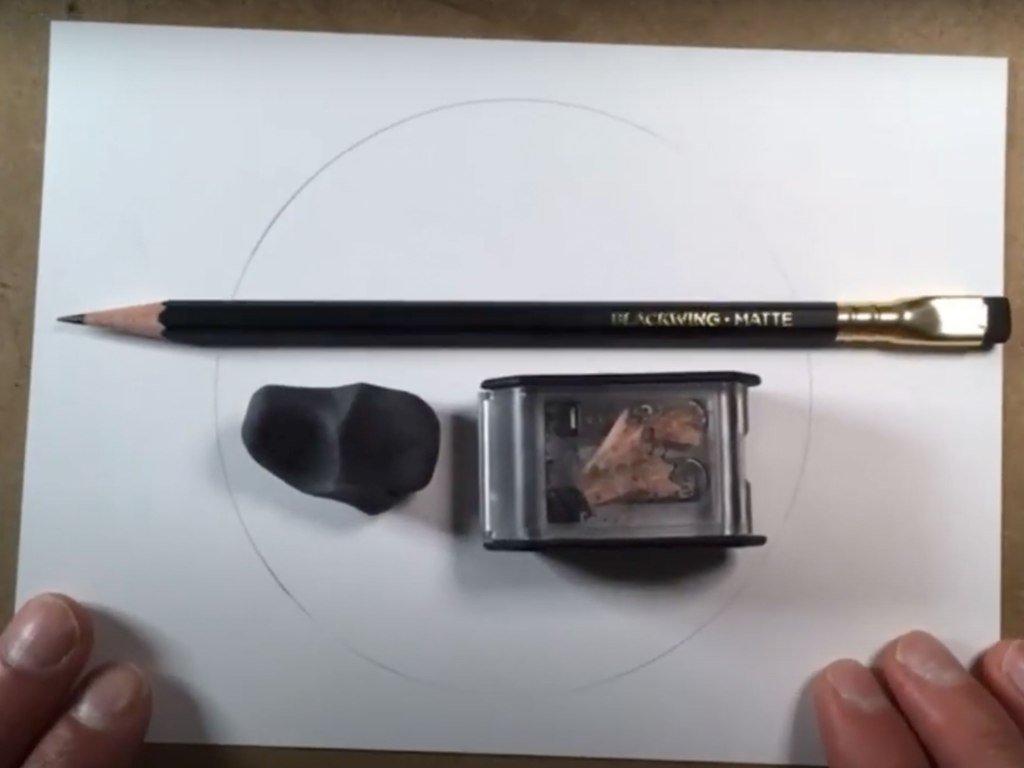
Step 1: Gather Your Materials

You don’t need much to get started. Grab a pencil, some paper, an eraser (kneaded works best), a piece of paper.

how to draw an easy mountain scene - step 1

Step 2: Begin With a Few Dots

Next, consider the shape or profile of the mountains. Create a blueprint by using the simplest form of mark-making: dots. This is the foundation of your doodle.

how to draw an easy mountain scene - step 2

Step 3: Build on top of your foundation

Begin to add some solid lines on top of your dots. From there, think about the elements you’d like to see in your doodle, for example, snow at the summit of a mountain or a reflective lake.

how to draw an easy mountain scene - step 3

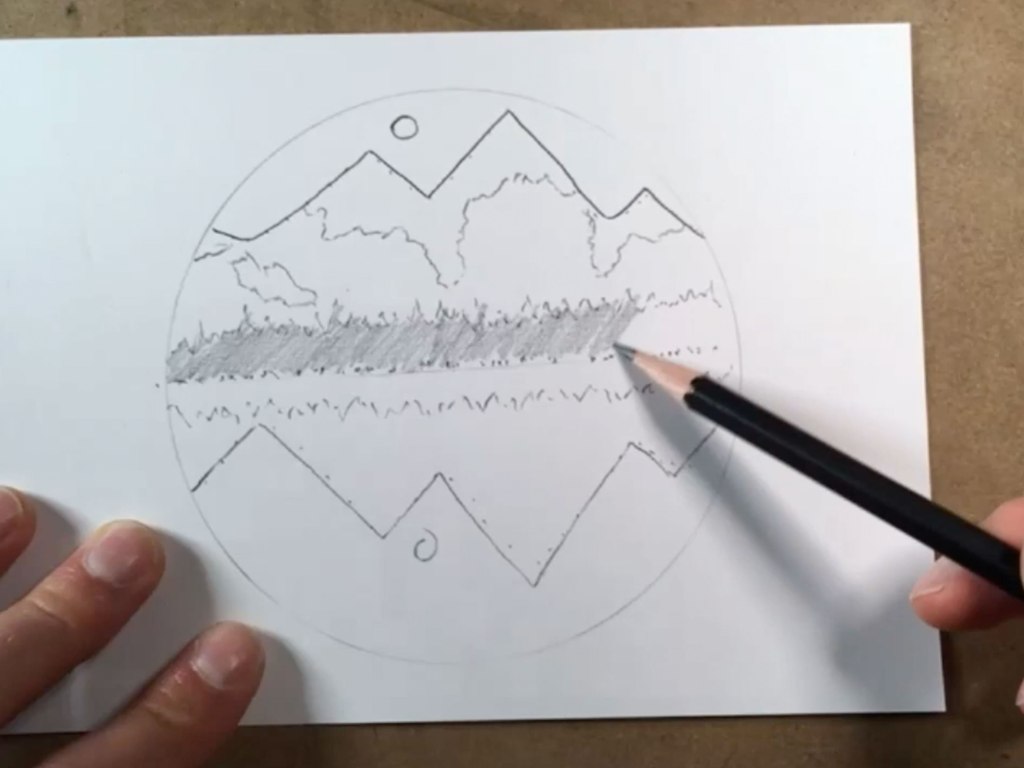
Step 4: Add Your Finishing Touches

Once you’re happy with the way your line drawing came out, begin adding texture by using smaller marks in a consistent pattern. This is very free-form, so just have fun with it!

how to draw an easy mountain scene - step 4

How to Draw an Easy Mountain Scene Video Tutorial​

It’s time to draw along with this video tutorial. By the time you’re finished you will have learned how to draw an easy mountain scene!

https://youtu.be/p44_cEUmhw4

Now you know how to draw an easy mountain scene using the Hike And Draw method! If you found this helpful, consider sharing this article with a friend, or even better – show them what you’ve learned by teaching them yourself 🙂

Enjoy the Tutorial? Try my FREE Nature Drawing Lesson!

Hike And Draw Free Workshop